I’m writing to you with the glow of a phone screen still on my cheek, the same light that keeps our teens awake while abuela whispers prayers in the next room. I’ve seen how pings fracture attention and soften moods, how blue light steals melatonin like a quiet thief. Yet our families carry remedies—respeto, cuidado, bilingual lullabies. If we braid science with tradition, we can guard their sleep and spirit—and here’s where the weaving begins.
Main Points
- Dim screens and set a nightly device “rest period” to protect melatonin, improve sleep, and reduce next-day mood dips and foggy focus.
- Practice 20-20-20 and daylight scrolls; add outdoor walks to lower eye strain, boost attention, and support healthier mood regulation.
- In Latino homes, use bilingual guidance and shared values (respeto, cuidado) to shape tech rituals and gentle boundaries without shaming.
- Batch notifications, keep tempting apps off the home screen, and name cravings with 4-6 breathing to ride out urges.
- Create family agreements: device-free meals, phones face down before bed, clear conflict plans, and involve elders/coaches for support.
How Screens Affect Sleep, Focus, and Mood
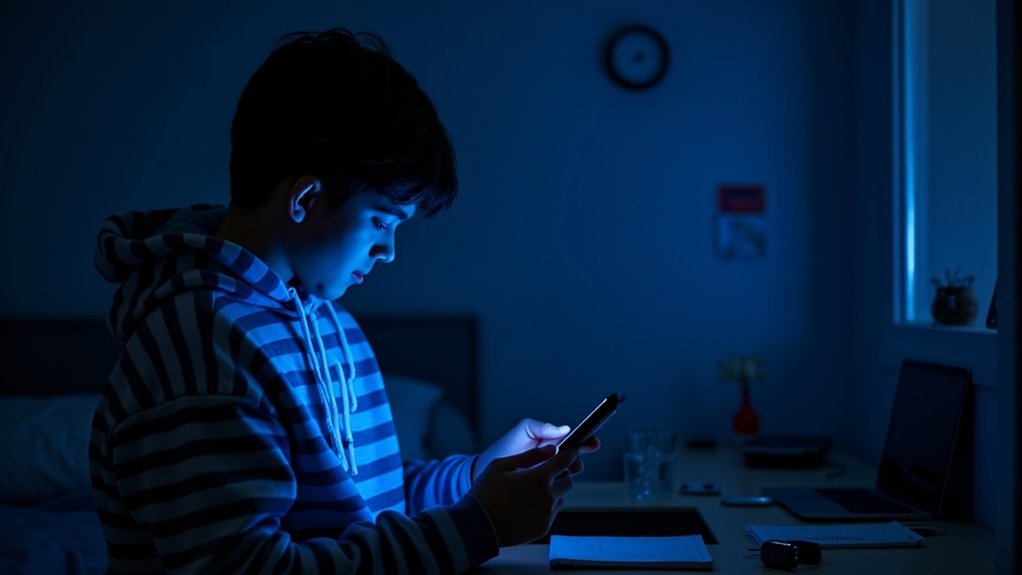
How often does a glowing rectangle borrow the night from our eyes? I watch its light braid itself into my thoughts, a quiet sorcerer tinting midnight with false dawn. When I linger past bedtime, sleep thins—melatonin stumbles, dreams arrive late, and morning feels grainy. Focus follows sleep; deprived, my attention splinters, chasing alerts like startled birds. Every swipe rehearses urgency, so calm has fewer rehearsals.
I’ve learned to treat screens like weather: predictable, powerful, manageable. Blue light near bedtime? I dim it, step back, let darkness realign circadian gears. Notifications? I corral them, reclaim single-tasking as a craft. Mood? I audit inputs—doom-scrolling drains, deliberate reading steadies. When I pause, breathe, and close the lid, I don’t lose the world; I regain the rhythm to meet it.
Unique Digital Realities in Latino Families
Sometimes, between languages and logins, our homes glow like small borderlands. I scroll through two geographies at once: school portals in English, abuela’s prayers on WhatsApp voice notes. You know this rhythm—the phone as translator, ledger, and lantern. Notifications carry remittances of affection, but also debts of expectation. I become bridge, cipher, witness.
In our families, privacy is communal, yet secrets breathe in drafty corners of the feed. We inherit algorithms like surnames—recommenders trained on scarcity, ads that mistake our joy for risk. I recognize how humor disguises exhaustion, how memes become code for resilience. When elders ask for help, I feel the sacred transfer of trust. When I teach them swipes and taps, they teach me how attention is a moral act.
Science-Backed Tips for Healthier Tech Habits

A small, steady ritual can tilt the day toward calm: I set my phone to rest like a sleeping ember an hour before bed, letting melatonin rise as blue light fades and dreams rethread their loom. I dim screens by sunset; the circadian clock thanks me with deeper sleep.
I practice 20-20-20—every twenty minutes I look twenty feet away for twenty seconds—to unfurl eye strain and reset attention. I batch notifications; the brain’s salience network learns to trust silence. I keep apps off the home screen, because friction is a quiet teacher. When cravings surge, I name them, breathe four counts in, six out; urge surfing passes like weather.
I choose daylight scrolls, outdoor walks, and device-free meals. Neuroplasticity notices—and follows.
Culturally Responsive Strategies for Parents and Caregivers

Why does a family’s rhythm feel different when we honor the stories that raised us? I ask because digital wellness deepens when our roots breathe. I invite you to name the values your elders taught—respeto, cuidado, alegría—and translate them into daily tech rituals: phones sleep where dreams do not; meals welcome voices, not alerts. I model curiosity, not shame: “What does this app give you? What does it take?” I weave Spanish and English like twin rivers, reminding my child that language can guide attention, not fracture it. I use micro-ceremonies—candles at bedtime, a song before screens—so transitions feel held, not forced. I listen for stress in posture, brightness in eyes. Culture isn’t nostalgia; it’s a living protocol for balance.
Building Family Agreements and Community Support
Roots whisper values; agreements give them a home. I invite you to the table, where phones rest face down like sleeping birds and we draft a covenant. We name rhythms: screens dim an hour before dreams, meals become sanctuaries, and online storms pause when tempers rise. I ask each voice to claim a boundary and a hope; we seal it with accountability that’s tender, not timid.

I widen the circle. Elders, coaches, faith leaders—our constellations—offer mentorship and safe spaces after school, so scrolling isn’t the only refuge. We map resources: bilingual workshops, library tech nights, community mental health lines. I track what works, revise without shame, celebrate micro-wins. In practice, our agreement becomes living law: disciplined, loving, and luminous.
Frequently Asked Questions
How Can Schools Integrate Digital Wellness Into Bilingual Curricula?
Integrate it by co-designing bilingual modules on mindful tech use, sleep hygiene, and attention rituals; I’d weave storytelling, data diaries, device Sabbath studios, and peer mentorship, evaluating mastery through reflective bilingual portfolios, habit metrics, and community showcases.
What Funding Supports Community-Led Digital Wellness Programs?
You’ll find support from local health departments, community foundations, state innovation grants, corporate CSR tech funds, and federal streams like SAMHSA, HRSA, CDC, and Title IV-A. I’ll braid partnerships, metrics, and lived wisdom to unlock them.
How Do Immigration-Related Stressors Interact With Screen Overuse?
Like tangled roots, they entwine: immigration stress fuels screen overuse as escape, while late-night scrolling magnifies anxiety, sleep loss, and isolation. I see you; I’d map routines, foster co-regulation, curate feeds, and build offline anchors to restore balance.
Are There Faith-Based Approaches to Digital Balance for Latino Youth?
Yes—rituals, liturgy, and communal service can anchor attention. I’d weave examen-inspired nightly reflections, Sabbath-style tech fasts, and scripture-backed family covenants. You’d mentor youth to treat devices as tools, not idols, practicing presence like prayer.
What Metrics Track Progress in Family Digital Wellness Initiatives?

I track progress through reduced nightly screen minutes, steadier sleep duration, calmer mood logs, richer family check-in scores, consistent device-free meals, improved grades, strengthened boundaries honored, and relapse frequency. Numbers breathe with stories; metrics mirror hearts learning disciplined, luminous connection.
Read The Next Blog Post –
As I close this guide, I picture us dimming screens like sunset lanterns, breathing easier. I’m not chasing perfection—just small rituals that protect sleep, focus, and moods with the tenderness of cuidado. Together we can craft bilingual whispers of guidance, invite abuelos’ wisdom, and honor respeto at the table. Batch the pings, soften the blue, rest the eyes—twenty, twenty, twenty. With these steps, our families glow brighter than a thousand suns, and our nights finally exhale.