


Nearly 1 in 5 Latinos experiences anxiety or depression, yet many of us stay quiet at the dinner table and in the pew. I’ve learned that silence has a heartbeat—abuelas’ prayers, fathers’ migrations, children translating worry into two languages. I speak to you as kin: we can name the flutter in the chest, use rhythm and ritual, and lean on faith without shame. And when community blesses therapy, something unexpected opens—listen closely…
Main Points
- Leverage familismo and faith to frame support, reciprocity, and hope, turning stigma into shared responsibility and disciplined optimism.
- Use bilingual communication tools: name sensations early, rotate languages for nuance, and keep a shared vocabulary to reduce silence and confusion.
- Engage trusted leaders—faith guides, promotores, abuelas—to bridge clinics and homes, pairing prayer with psychoeducation and follow-up as covenant.
- Honor migration and generational stories to reframe hypervigilance as inherited vigilance, creating small rituals and role rotations for stability.
- Blend tradition with evidence-based care: CBT with dichos, mindful sobremesa, rhythmic regulation, practical routines, and nutrition habits to sustain recovery.
Understanding Cultural Strengths: Familismo, Faith, and Resilience
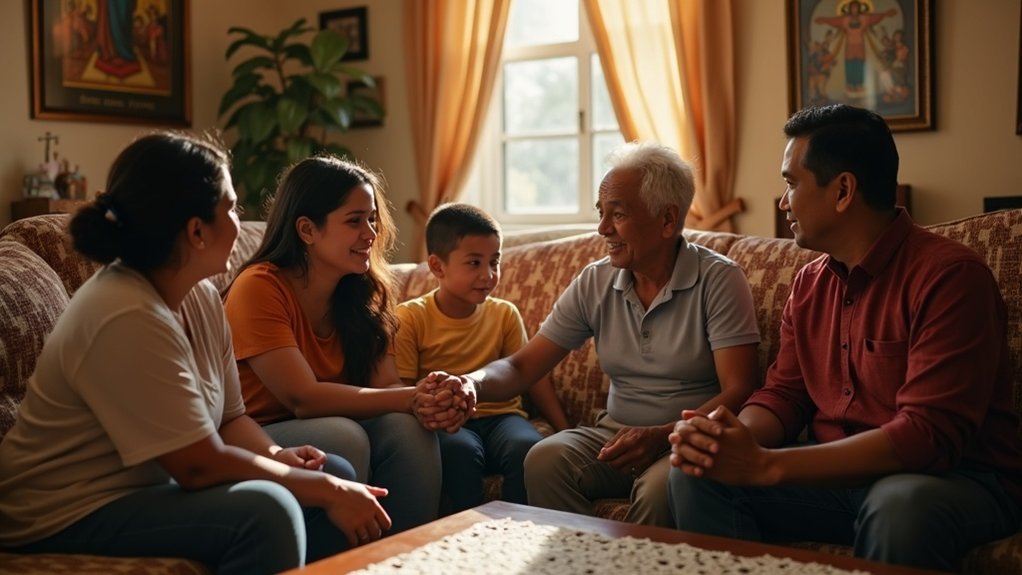
How do we begin except by naming what already lives in our bones—familismo, faith, and a stubborn resilience that outlasts storm and sun? I learned them at crowded tables where worry passed like salt, and nobody ate alone. Familismo isn’t sentiment; it’s a structure of reciprocity—roles, obligations, trust—an ecology where distress meets collective problem-solving. Faith, too, moves beyond ritual. It offers moral coordinates, a lexicon for suffering, and disciplined hope that organizes the day. Resilience becomes practice: reframing setbacks, honoring elders’ strategies, converting scarcity into ingenuity. Building money confidence through financial literacy—like tracking cash flow, protecting credit, and using community resources—can reduce stress and support the same communal healing we value. When anxiety knocks, I map these assets. I ask: who holds the story, who holds the schedule, who holds the light? Together, we align purpose with boundaries, compassion with accountability, rest with responsibility—so healing becomes communal, durable, and ours.
Breaking the Silence: Bilingual Conversations at Home and in Community
When did silence become our second language, the pause between “¿estás bien?” and “I’m fine” stretching like a clothesline heavy with unspoken things? I learned to read those pauses—abuela’s stirring spoon, mamá’s tight smile, my own restless foot—each a dialect of worry. You and I can change the script. Start small: name sensations before they snowball. “Siento presión en el pecho—today I’m carrying weight.” Offer scaffolds: “On a scale from café claro to espresso, how strong is the feeling?” Rotate languages for nuance; Spanish holds warmth, English carries edges. Establish consent—“¿Quieres consejos o compañía?” Practice repair after missteps. Keep vocabulary visible on the fridge: ánimo, boundary, respiro. Record family phrases, build a shared lexicon. Conversation becomes ritual, inheritance, and an instrument tuned toward relief. As part of caring for mind and body, keep vaccines up to date—like annual flu and decennial Tdap—to protect family health and reduce stress around preventable illness.
Partnering With Trusted Leaders: Faith Leaders, Promotores, and Elders
Sometimes the path to help is already woven into our neighborhood—under the church’s bell, at the clinic’s doorway, in the elder’s kitchen where caldo steams and stories rise. I turn to those keepers of trust—pastors, promotores, abuelas—because they carry language, ritual, and the steadiness anxiety tries to steal. Together, we braid care that doesn’t rupture dignity.
I ask faith leaders to pair prayer with psychoeducation, to bless therapy like anointing oil. I invite promotores to bridge clinics and living rooms, translating symptoms into plans. I sit with elders, listening for remedies that echo evidence.
- Name the fear precisely; let leaders mirror it without judgment.
- Map warm handoffs—sanctuary to clinic, kitchen to counselor.
- Practice follow-up as covenant, not courtesy.

And whenever possible, partner with bilingual providers who respect culturally responsive care, verifying language fluency and honoring family roles, spirituality, and colonial wound healing.
Honoring Migration and Generational Stories in Healing
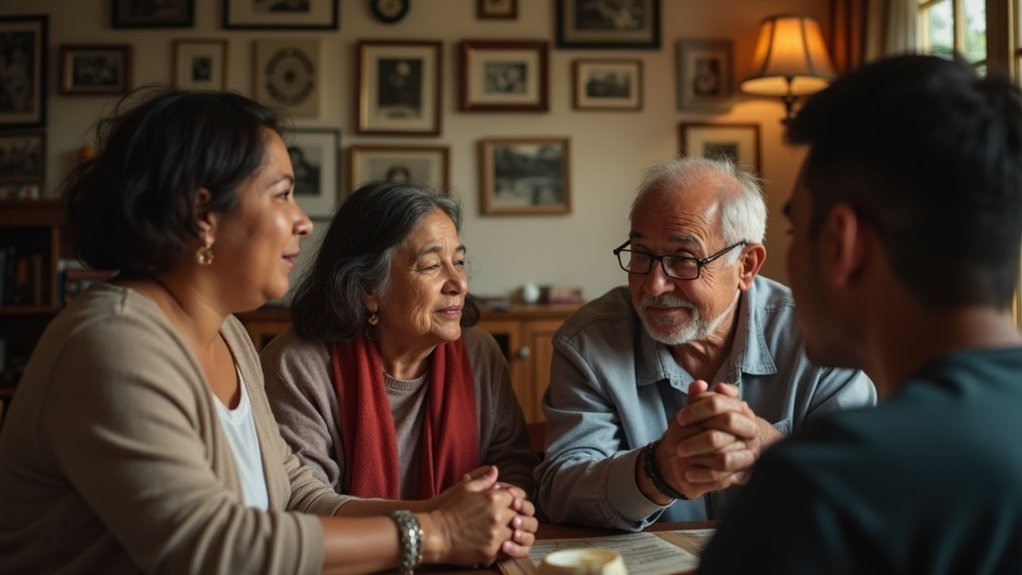
Why does my chest loosen when I trace our crossings—the desert wind, the bus tickets folded like prayers, the apartment keys passed from tía to cousin? I think it’s because naming the route gives my body coordinates. Anxiety shrinks when I pin it to a map of choices, not failures. I tell you this: the story is medicine when we honor its weight and craft.
I ask elders for specifics—the mile markers, the border officer’s eyes, the first paycheck’s smell—and I feel my pulse align with theirs. Grief gains context; resilience gains lineage. I stop pathologizing hypervigilance and recognize inherited vigilance. Together, we catalog sacrifices and skills, then claim them as assets. In that inventory, shame exhales. We become historians of our own nervous systems.
We also ground our healing in small, shared rituals—text-at-dawn check-ins, rotating roles, and community accountability—so consistency, form, and joy become daily practices we track and celebrate together.
Blending Tradition With Evidence: CBT, Mindfulness, Music, Food, and Celebration
Though science speaks in charts and trials, I braid it with abuela’s remedies and the drum of our gatherings so the healing lands in the body. I pair CBT with dichos, turning thoughts like tortillas—flip, test, season. Mindfulness becomes a quiet sobremesa, breath steeped like canela. We rehearse attention, track triggers, and build plans that fit the kitchen table.
- Map core beliefs, then re-script them using family metaphors; precision plus cariño sustains change.
- Anchor breath to rhythm—palmas, a güiro’s rasp—so regulation travels from cortex to corazón.
- Make meals protocols: fiber, color, hydration; gratitude becomes dosage; celebration marks compliance.

Music loosens grief’s knot; a cumbia cues behavioral activation. Food sets circadian anchors. Celebration measures progress—rituals as data, joy as adherence. We also draw on community networks to shorten the path to care, turning mentors, chambers, and local circles into warm introductions for culturally fluent support.
Frequently Asked Questions
How Can Uninsured Families Access Low-Cost, Culturally Responsive Therapy?
Start with community clinics, sliding-scale therapists, and university counseling centers; I’ll guide you to Latinx directories and mutual-aid funds. Ask about promotoras, telehealth, and group therapy. Elders’ wisdom meets modern care; we stitch resilience across generations, uninsured yet unbroken.
What Rights Do Teens Have to Confidential Mental Health Care?
Teens often have rights to confidential mental health care; laws vary by state. I honor consent, limit disclosures, and report imminent harm. I witness secrets like seeds—held, watered, guarded—so healing crosses kitchens, classrooms, and generations without fear.
How Do Immigration Status Concerns Affect Seeking Professional Help?
Immigration fears silence help-seeking; I feel papers become shadows stalking clinics. You weigh confidentiality, mandatory reporting, family separations. I urge you: learn rights, use community clinics, anonymous hotlines, legal aid. We braid courage with caution, honoring elders’ whispers and children’s futures.
Which Spanish-Language Crisis Lines Are Available 24/7 in the U.S.?
Lifeline 988 en Español, Crisis Text “AYUDA” al 741741, TrevorLifeline 866-488-7386 opción español, y Línea de Violencia Doméstica 800-799-7233 operan 24/7. I start here, remembering 1 in 5; ancestors whisper courage; we master reaching out.
How Can Workplaces Support Latino Employees’ Mental Health Needs?

Offer flexible schedules, culturally competent benefits, bilingual counseling, affinity groups, and anti-stigma training. I’d champion leaders who listen. I see abuela’s wisdom braided with HR policy—psychological safety, mentorship ladders, fair pay—so our roots breathe, and our futures flourish.
Read The Next Blog Post –
I carry our stories like candles—small flames mapping the dark. When I name my fear in two tongues, it softens; when we breathe together, time loosens its fist. With abuela’s prayers, a promotor’s guidance, and the drumbeat of our meals, we stitch tomorrow to yesterday. CBT notes, rosary beads, and laughter in the kitchen—tools and talismans. Let’s keep talking, practicing, celebrating. From stigma to strength, we don’t walk alone; we walk as a chorus, and the night listens.


