When I sit with my ache and name it aloud, something shifts; the fracture starts to glow like a seam of gold. I breathe, listen, and offer my truth a wider chair, letting other voices rest beside it. Shame loosens, memory softens, and my body remembers the door back to safety. Unity isn’t a slogan—it’s a practice of presence, a rhythm that steadies the heart—and when it gathers, the quiet begins to speak.
Main Points
- Inner unity forms when we reclaim outsourced power, name our ache, and revise our story without erasing truth.
- Tight feedback loops—small steps, clear metrics, honest reflection—turn healing into adaptive growth and steadier self-legibility.
- Community belonging alchemizes shame into wisdom; shared breath, listening, and truthful naming restore dignity and calm.
- Mind-body-spirit alignment—disciplined breath, chosen thoughts, and intention—builds coherence, reducing reactivity and soothing emotional wounds.
- Daily practices—calibrated breathing, compassionate communication, and nightly integration—reinforce boundaries as bridges and cultivate lasting inner peace.
From Fragmentation to Wholeness: The Inner Work of Reconnection

How did I become so scattered that even my own name felt like an echo? I traced the fracture lines with ruthless tenderness, noticing where I’d outsourced power, where silence hardened into armor. I stopped sprinting from the ache and sat with it, breath like a tuning fork, calling my parts home. I listened for the smallest consent inside—yes, keep this; no, release that.
I practiced precision: naming sensations, interrogating beliefs, revising the story without erasing its truth. I courted the body, letting muscles remember safety, letting tears metabolize what words couldn’t. Boundaries became bridges, not walls. Attention refined into devotion. In that steady calibration, unity wasn’t a slogan but a felt architecture. Piece by piece, I became legible to myself—and whole.
Like any resilient system, I built tight feedback loops—small sprints, clear metrics, and honest postmortems—so healing became repeatable, much like adaptive leadership that learns, adjusts, and grows through every iteration.
Healing Through Belonging: How Community Softens Pain
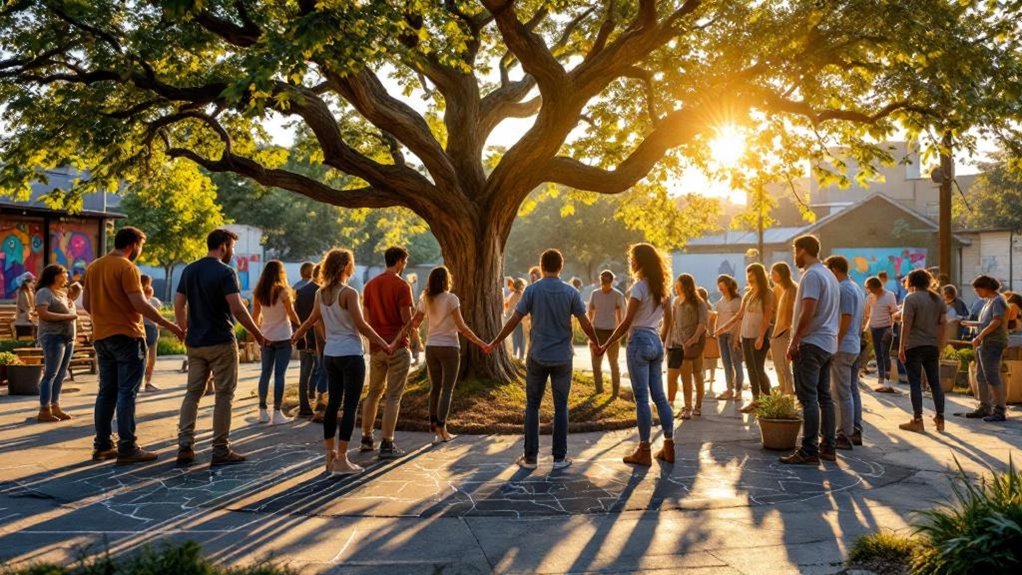
Wholeness didn’t ask me to go it alone; it moved me toward the firelight of others. In that circle, my sharp edges softened, not from erasure but resonance. I learned that sorrow thins when voices braid around it, that dignity returns when someone remembers my name without hurry.

I practice belonging like craft: listening until nuance appears, offering truth without spectacle, receiving care without apology. We calibrate courage together—one disclosure, one nod, one breath that says stay. Repair becomes communal alchemy: shame oxidizes into wisdom, isolation into steadiness. I don’t relinquish agency; I refine it through shared cadence. When I falter, our chorus keeps time. When you falter, I hold a corner of your sky. This is how pain learns to loosen. We build gentle, everyday rituals—like texting at dawn to count “ten squats, two breaths, one promise”—to anchor accountability and support within our circle.
Mind-Body-Spirit Alignment as a Path to Calm
Sometimes the quiet isn’t out there; it’s waiting where breath, thought, and pulse meet. I start there, gathering myself like light on still water. One disciplined inhale steadies the body; one chosen thought steadies the mind; one whispered intention steadies the spirit. Alignment isn’t accident—it’s practice.
I scan sensation, name it, and soften what resists. I watch thoughts without courting them, then select the one that serves. I invite the spirit with a question: What would love do here? When these three agree, calm arrives like a key turning.
You can train this harmony. Anchor with breath counts, refine attention with precise cues, and consecrate action with a small vow. Repetition forges coherence. Coherence breeds trust. Trust, at last, becomes peace.
Keeping your foundation strong with annual flu vaccine and decennial Tdap helps protect your body’s baseline, so mind and spirit can settle more easily into calm.
Repairing Relationships With Compassionate Communication


Why do bridges appear just when we dare to speak gently? Because compassion disarms the armor we both wear. When I meet you with curiosity instead of verdict, I watch the air soften; meanings uncoil. I name my feeling, not your failure, and a quiet doorway opens. I listen until your breath steadies; I mirror the essence, not the edges. The hurt becomes specific, workable, almost luminous.
I choose words that dignify both of us: concise, accountable, clean. I ask, Did I understand? I pause before defending, because understanding repairs faster than victory. I offer amends without bargaining, and boundaries without thorns. In that calibrated exchange, distance shrinks. Our nervous systems relearn safety. The old story loosens its grip, and a wiser one—mutual, clear—takes root.
Daily Practices That Cultivate Unity and Resilience
How do I keep unity from fading when the day scatters me? I begin by anchoring breath to bone, attention to pulse. I speak to you as I speak to myself: mastery lives in rhythm, not spectacle. Small, repeatable rites braid resilience through the hours, so when chaos knocks, the hinges hold.
1) Dawn calibration: I sit upright, inhale for four, exhale for six, eight rounds. I name my intention—steadfast, generous, clear—and visualize a golden thread connecting mind, heart, and action.
2) Midday alignment: I pause before replies. I ask, “What serves the whole?” I soften jaw, drop shoulders, and choose the cleanest true sentence.

3) Night integration: I harvest three proofs of courage. I forgive the frayed edges, bless tomorrow’s chance, and sleep like soil receiving rain.
If heaviness, looping thoughts, or social withdrawal linger beyond two weeks, treat duration as data and consider seeking culturally responsive care as an act of disciplined courage.
Frequently Asked Questions
How Does Trauma-Informed Art Therapy Support Unity and Emotional Healing?
Trauma-informed art therapy supports unity and emotional healing by honoring safety, consent, and choice. I guide you to shape pain into symbols; we witness together, regulate breath, reframe narratives, and weave fragmented selves into one resilient, shimmering story.
Can Digital Communities Provide Genuine Belonging and Reduce Loneliness?
Yes—when designed with intention, they can. I watched Maya find midnight guildmates who remembered her birthday. I’ve felt it too: attentive threads, rituals, reciprocity—crafted presence that quiets ache, teaches attunement, and sustains belonging beyond absence.
What Role Do Sleep Patterns Play in Restoring Inner Peace?
Consistent sleep patterns anchor inner peace; I treat them like sacred tides. When I honor circadian rhythm, cortisol softens, memory integrates, and mood steadies. Guard bedtime rituals, dim light, cool rooms—then watch your nervous system hum with quiet mastery.
How Can Intergenerational Dialogue Mend Inherited Emotional Wounds?
I invite elders’ stories to rethread wounds; apparently, the past insists on visiting until we offer tea. I witness patterns, name ghosts, return dignity, renegotiate myths, and—irony—inherit freedom by inheriting truth, then practicing forgiveness like disciplined alchemy.
Are There Biomarkers That Track Progress in Emotional Reconciliation?
Yes—indirect ones: HRV, cortisol diurnal slope, inflammatory cytokines, oxytocin pulses, sleep architecture, and amygdala-prefrontal coupling shifts. I watch these metrics like constellations; as they harmonize, I feel your reconciled heart steady, breath deepen, nights lengthen, estrangement thaw.
Read The Next Blog Post –
When we practice unity, wounds don’t vanish—they transmute. I keep returning to this: loneliness raises mortality risk by 29%, yet even brief, authentic connection lowers stress markers within minutes. I feel it when we breathe together, name the ache, and let boundaries become bridges. The body remembers safety, the mind softens its edges, and spirit hums. In that circle of belonging, shame rusts into wisdom, and peace returns—not a miracle, but a daily, luminous craft.