


You probably don’t know how quietly a flag can rewrite a heartbeat. I’ve watched stripes turn neighbors into distant constellations, each star fenced by stories we didn’t choose. Yet I’ve also seen cloth become a bridge when we let it host the questions we fear. I’m asking you to meet me where symbols loosen their grip—on the porch, by the watershed—so we can test allegiance with openness and see what breath we share next.
Main Points
- Recognize symbols’ double edge: they can unite and uplift or entrench exclusion; test their meaning, impact, and accountability in real communities.
- Recenter identity on shared breath, watersheds, labor dignity, and care, keeping elements that enlarge belonging and discarding those that divide.
- Reimagine banners as convening tools, converting slogans into auditable policies that feed children, heal soil, and shelter strangers.
- Build daily bridges: spare chairs, tea in mismatched cups, listening to river-names, and civics practiced like breathing across weeks.
- Replace hero myths with choruses: storytellers, nurses, coders, elders shaping rights to water, data, and ancestry, guided by measurable compassion.
The Double-Edged Power of Symbols
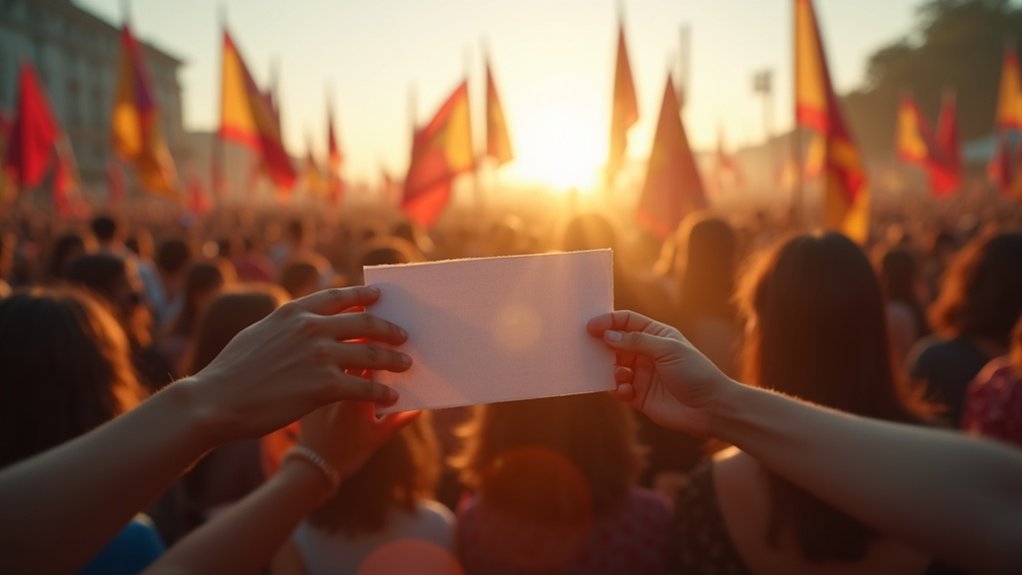
How do we forget that a flag can both shelter and scorch? I’ve watched cloth turn to weather, a wind that blesses some faces and chafes others raw. A symbol is a blade smithed from breath: our stories hammered into edge and sheen. When I raise it, it raises me. When I clutch it too tightly, it cuts.
You and I know the chemistry: pigment becomes permission, pattern becomes policy. Emblems convene power, concentrate memory, and summon futures that haven’t earned their passports yet. But symbols also bargain with shadows; they invite devotion that outgrows its conscience. I test mine like a bridge, stepping carefully across each plank of meaning. If it carries truth and care, I proceed. If it creaks with erasure, I stop. And when symbols rally us, I anchor practice to community by rotating roles—accountability and support with shared playlists, dawn texts, and metrics of consistency, form, and joy.
When Identity Unites—and When It Divides
So I set the flag down and listen for the names inside me, the ones stitched by family, border, belief. Some rise like birds at dawn, calling me toward kinship. Others rattle like keys to locked rooms. You know this music too: how a shared story gathers strangers into a circle, how a proverb becomes bread, how a color on cloth steadies trembling hands.
Yet identity can sharpen into a blade. When fear salts the well, we drink separation. I’ve felt it: the warm campfire turning tribunal, passwords becoming walls. Power loves tight labels; it counts us easier that way. So I test each allegiance: Does it widen breath or ration it? Does it invite witness, or demand mirrors? I keep what makes us larger.
Reimagining Banners for the Common Good

Where else can a banner go but back to the wind that birthed it? I lift mine to the sky and ask it to unlearn conquest. Cloth remembers drums and orders; I invite it to remember breath. Imagine standards woven from common watersheds, stitched with labor’s quiet dignity, dyed with night skies that belong to no throne. Symbols shouldn’t command; they should convene.
Reader, I’m not burning flags; I’m composting them. Let threads become seeds for policies that feed children, heal soil, and shelter strangers. Let emblems pledge measurable care: a metric of rivers restored, wages raised, prisons emptied of poverty’s captives. When a banner moves, it should carry mandates, not myths—auditable promises, not thunder. I’ll salute only what’s accountable to you, to us, to Earth.
Let symbols evolve into structures that deliver measurable care, much like purpose-driven models that track both mission metrics and unit economics to ensure accountability and inclusion.
Practices for Bridging Difference in Daily Life

Sometimes the smallest rituals open the widest doors: I carry spare chairs to porches and corners, brew tea in mismatched cups, and invite a neighbor whose vote unsettles me to share weather and wages before opinions. I ask for names of rivers that raised them, and I offer mine; the air listens better than we do. I practice civics like breathing—slow, steady, repeatable—so policy can meet pulse. If conversations feel heavy for more than two weeks, I treat that duration as data and look for culturally responsive care that honors language, family roles, and healing traditions.
1) Four hands lift a table; its legs become a commons, steady on cracked concrete.

2) A candle between us burns like a truce, wax pooling into soft cartography.
3) Pens pass back and forth, signing petitions and birthday cards with equal care.
4) Sidewalk chalk maps the week: meetings, meals, and a circle where silence speaks.
Stories That Stitch Us Into a Shared Future
I set the chairs and chalk aside and ask for a story, because breath needs a body to keep it. You nod, and the room inhales. I braid your memory with mine, thread by thread, until the air learns our names and the floor remembers borders are rumors.
I refuse the easy myth of solitary heroes. I want a chorus: farmers and coders, nurses and night-shift poets. We speak of water rights, data rights, ancestral rights—each syllable a seed. The lamps flicker like voting fireflies; they mark a path where metrics bow to meaning.

When we tell it right, the future arrives early. Policy follows grammar; budgets answer metaphors. I promise to carry your chapter carefully, and you promise to carry mine, so justice has somewhere to live.
And as we gather, we remember to keep vaccines up to date—from childhood schedules and annual flu shots to decennial Tdap, HPV, shingles at 50+, and timely COVID boosters—so our shared story protects the infants, elders, and immunocompromised among us.
Frequently Asked Questions
How Do Children Interpret National Symbols Across Different Cultures?
Children interpret national symbols as living spells: I’ve watched them read flags as stories, anthems as weather, emblems as guardians—meanings reshape with history, schooling, and struggle, while you and I teach them to question, inherit, and transmute power.
What Role Do Emojis Play in Modern Identity Symbolism?
Like sparks in dusk, emojis script swift badges of self; I wield them to code allegiance, irony, dissent. You read my mask, negotiate tribe and tenderness. Together, we remix ideology into pocket sigils, fluid, insurgent, sovereign.
Can Ai-Generated Flags Meaningfully Represent Diverse Communities?
Yes—if shaped with community consent. I weave algorithms like loom-spirits, letting your voices dye the threads. Together we encode struggle, joy, and futurity, so the flag breathes, contested yet luminous, a living treaty rather than wallpaper.
How Do Corporate Logos Influence Civic Unity Perception?

They shape civic unity’s perception; I feel logos blur public will and private myth. Picture me chasing a will-o’-the-wisp—bright brands promise togetherness, yet I sense soft capture, allegiance rerouted, democracy marketed, and belonging distilled into purchasable glow.
What Legal Limits Exist on Altering Official National Symbols?
Altering official symbols faces statutory protections, trademark-like restrictions, and constitutional constraints; I tell you, courts balance expression against bans on mutilation, false endorsement, and desecration. I navigate this twilight: permits, provenance, and political intent decide whether transformation sings or violates.
Read The Next Blog Post –
So I fold the flag into a question, I plant it like a seed, I water it with listening. I pledge not to power but to neighbors, not to borders but to breath, not to idols but to memory alive and restless. I walk, I ask, I mend. I let banners convene and not command. I test allegiance by openness, measure progress by care, and choose, again and again, one Earth, one porch, one future we make together.
#WeThePeopleOfOneEarth #UnityNotStripes #OnenessMovement #PeaceThroughUnity #HumanityFirst #PureLatinoContent


