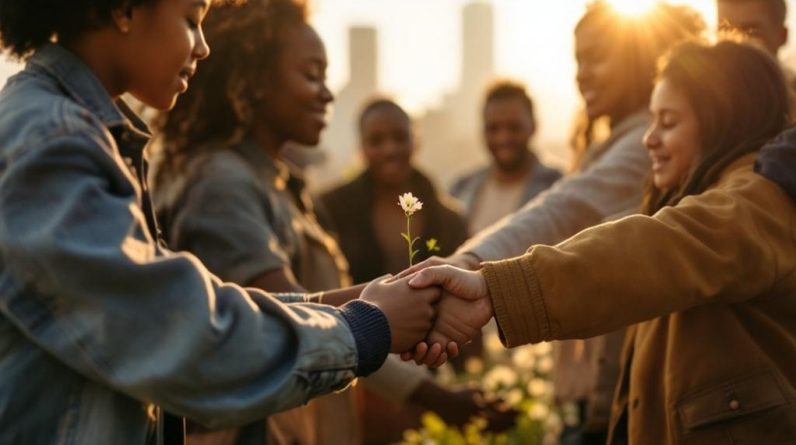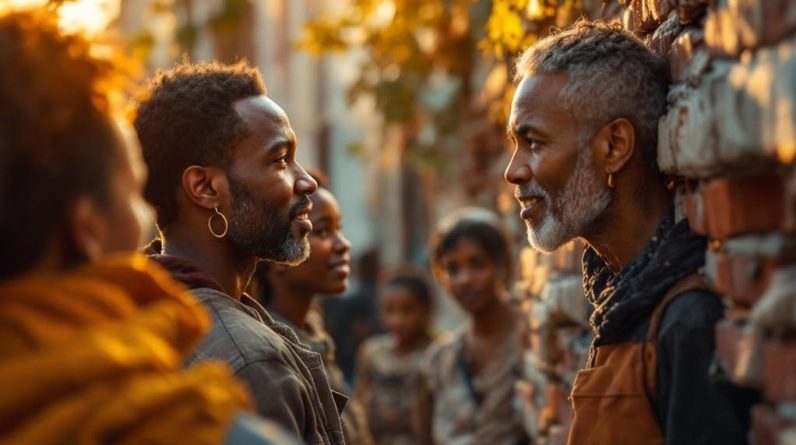
When a neighbor’s sudden loss drew us to her porch with soup and silence, I watched grief name itself and soften. I felt how courage travels best when it moves toward others, how small rituals—rotating chores, arriving on time, telling the truth—turn ache into a steady lantern. I’m learning that consent and witness are bridges, not slogans, and that endurance can be tender. There’s a ledger we rarely keep, and it changes everything.
Main Points
- Name grief and treat pain as practice, refining it into meaning rather than glamorizing suffering.
- Move from isolation to mutual care through witness, consent, reciprocity, and repair.
- Share wounds as stories that become lanterns and bridges, turning personal hurt into collective wisdom.
- Build resilient circles with simple rituals, rotating roles, and trauma-informed skills to distribute strength.
- Align action with a clear North Star, few commitments, and measurable steps that protect long-term stability.
The Alchemy of Shared Hardship

How does grief become a bridge instead of a chasm? I begin by naming the weight. You answer by letting yours breathe. In that exchange, sorrow becomes a crucible. Heat meets heat; impurities rise. What remains—pared, bright, tensile—resembles courage.
I notice how adversity rearranges my senses. Time warps; minutes dilate like molten glass. I shape them with intention, turning ache into artifact. When I speak plainly of fracture, meaning precipitates, fine as rain from a clear sky. I don’t glamorize pain; I refine it.
Shared hardship teaches the grammar of endurance: cadence, pause, strike, release. I practice it like scales, until muscle remembers what pride forgets. Then purpose appears—not as a prize, but a property—latent within pressure, revealed by disciplined tenderness.
In community, tending the body can mirror tending the spirit: staying current on annual flu vaccines and other preventive care becomes a quiet vow to one another’s well-being.
From Isolation to Connection

Courage doesn’t ring like a victory bell; it hums, and that hum draws me toward others. I once mistook solitude for mastery, polishing my edges in a room without windows. But silence grew heavy, like armor that forgot it was meant for movement. When I finally cracked it, light threaded through, and I saw your outline waiting.
I step toward you and the air changes—a subtle shift, like rain deciding to fall. My grief loosens. Your gaze names me present. We trade steady breaths, building a bridge plank by plank: witness, consent, reciprocity, repair. I learn that connection isn’t rescue; it’s calibration. Together we tune the instrument of our days. In that shared frequency, isolation dissolves, and capacity rises, deliberate, durable, true. In this rhythm of mutual care, we text at dawn—ten squats, two breaths, one promise—and let a tiny covenant keep our consistency, form, and joy aligned.
Stories That Turn Wounds Into Wisdom
When did the bruise begin speaking, and why did I wait so long to listen?
I trace its colors like a map. The purple murmurs, the yellow forgives, the green invents a door. I step through and meet my younger self polishing silence into armor. She hands me a shard—truth unsoftened—and the shard turns into a pen.
I write to you because stories transmute ache into architecture. When I name the wound, it becomes a lantern; when I share it, it becomes a bridge. Not confession—alchemy. I refuse spectacle; I choose sovereignty. The lesson isn’t that pain makes us noble, but that meaning makes pain finite. When your body whispers through chest tightness, thinned energy, or racing thoughts, treat duration as data and seek culturally responsive care that honors language, family roles, and colonial wound healing.

Listen: your scar keeps fluent time. Hold it to your ear. Hear the curriculum of becoming, the syllables of endurance. Speak them forward. Let wisdom inherit your breath.
Practical Ways to Build Collective Resilience

Sometimes the map begins with a small circle of chairs and a pot of soup. I invite neighbors, name what hurts, and listen until the room exhales. We set simple rituals: arrive on time, speak in turns, keep confidences. I rotate roles—host, scribe, timekeeper—so power travels like light around a table. I practice micro-restoration: a breath before replies, a pause when tempers warm, a question gentler than judgment. We train together—basic mediation, trauma literacy, conflict hygiene—so our courage has technique. I keep a ledger of commitments and care: who needs meals, who offers rides, who can hold silence. When storms come, we rehearse dignity: check-ins, resource maps, contingency buddies. Repetition becomes muscle; muscle becomes memory; memory becomes us. We pair our courage with data by running short sprints, tracking clear metrics, and holding quick postmortems—turning resilience into a repeatable system through tight feedback loops.
Aligning Action for Lasting Change
The circle of chairs taught me rhythm; now I score it for the long haul. I map our pulse to purpose, then pare away the noise. Alignment isn’t unanimous feeling; it’s disciplined cadence—what we’ll do, when, and why, repeated until trust takes root.
I begin by naming the North Star in one sentence, sharp enough to cut through fatigue. I translate it into three commitments, each with a steward, a clock, and a visible ledger. I convene brief ritual check-ins: what moved, what stuck, what needs heat. I prune tasks that don’t sing.
When doubt fogs the room, I borrow tomorrow’s light: a vivid story of consequence we can measure. Then I choose the next right action, and invite you to choose yours beside mine.

We embed measurable steps like building an emergency fund and protecting credit score so our cadence turns into durable, wealth-building progress.
Frequently Asked Questions
How Can Individuals Measure Personal Growth From Communal Healing Efforts?
I measure it by quieter reactions, braver asks, and wider empathy. I track repaired boundaries, consistent rituals, and honest mirrors. When your story expands mine without erasing me, I know I’ve grown—alchemy proven by steadier breath and luminous choices.
What Role Do Cultural Differences Play in Collective Resilience Strategies?
They shape rituals, metaphors, and boundaries; I weave them into strategies like constellations. I ask you to honor difference as fuel—translate symbols, rotate leadership, braid languages—so resilience becomes polyphonic, adaptive, and fiercely tender without dissolving integrity.
How Can Organizations Fund Community Healing Initiatives Sustainably?
Like a river fed by many springs, I’d braid funding streams: multiyear philanthropy, earned-revenue programs, participatory budgets, endowment growth, corporate matches, and community bonds—then measure impact, reinvest surpluses, and steward trust, so healing keeps blooming beyond grant cycles.
How Do Digital Communities Maintain Trust During Prolonged Crises?
I cultivate trust by practicing radical transparency, timely moderation, and communal rituals. I name harms, publish decisions, rotate stewardship, and archive memory. I invite dissent, safeguard privacy, verify sources, and renew codes—so our lantern stays lit through storms.
What Metrics Track the Long-Term Impact of Shared Storytelling?
I track retention, repeat participation, contribution rates, narrative diversity, sentiment shifts, social graph density, offline spillovers, advocacy actions, skill gains, and longitudinal wellbeing. I watch churn, cohort trajectories, story reuse, and healing arcs—evidence that shared myths transform behavior.
Read The Next Blog Post –
So here we are, you and I, dialing courage on a rotary phone as if time could bend to our need. I’ve learned that grief speaks, and when I answer, it hands me your name. Together we stitch lanterns from old scars, pause for bread, trade the heavy roles, and keep our ledgers honest. I won’t promise ease, only a north star. But I’ll walk with you—tender, steadfast—until pain remembers it can become purpose.