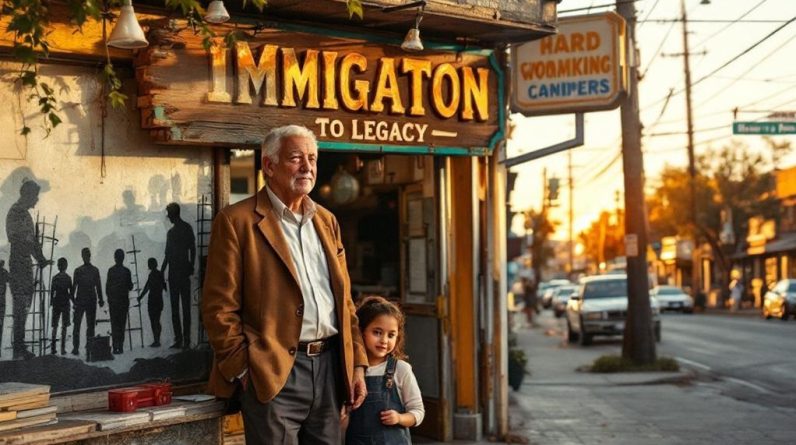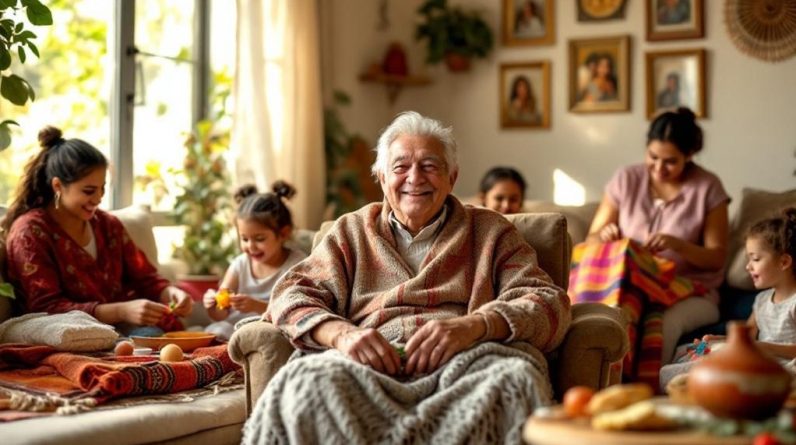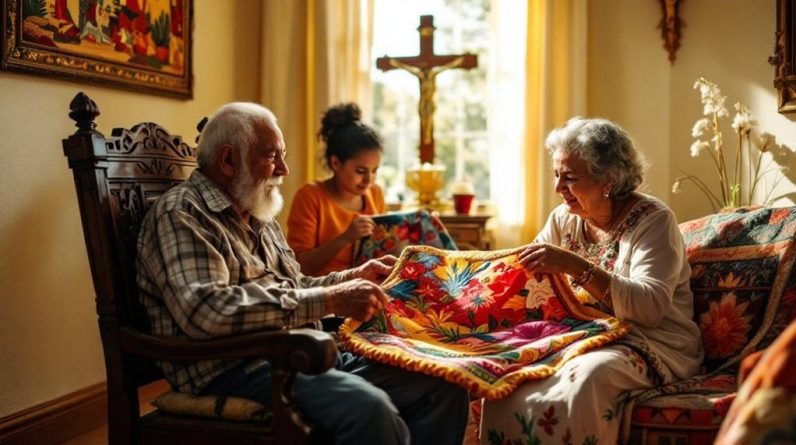
Nearly 80% of Latino elders say family traditions shape their daily choices, and I feel that truth in my bones. I’m writing to you from a kitchen where steam carries prayers, where a rosary clicks like rain on tin. I measure masa by memory and stitch names into stories, each thread a small rebellion. Faith wakes before dawn; language hums in the pan. Come closer—I’ve kept a seat warm, and there’s something you should hear.
Main Points
- Elders transmit culture at the kitchen table, sharing stories, recipes, and prayers that braid memory with identity across generations.
- Language mentoring—bilingual naming, lullabies, and sanding shame off tongues—keeps voice, belonging, and continuity alive.
- Rituals and faith practices—home altars, feast days, dawn prayers—anchor daily life and guide resilience and purpose.
- Mentorship and coalition-building—mentoring back and sideways—turn legacy into civic action, policy, and community care.
- Healing foodways and remedies—measured by palm and memory—merge nourishment with caregiving, preserving traditions and autonomy in aging.
Generational Storytelling at the Kitchen Table
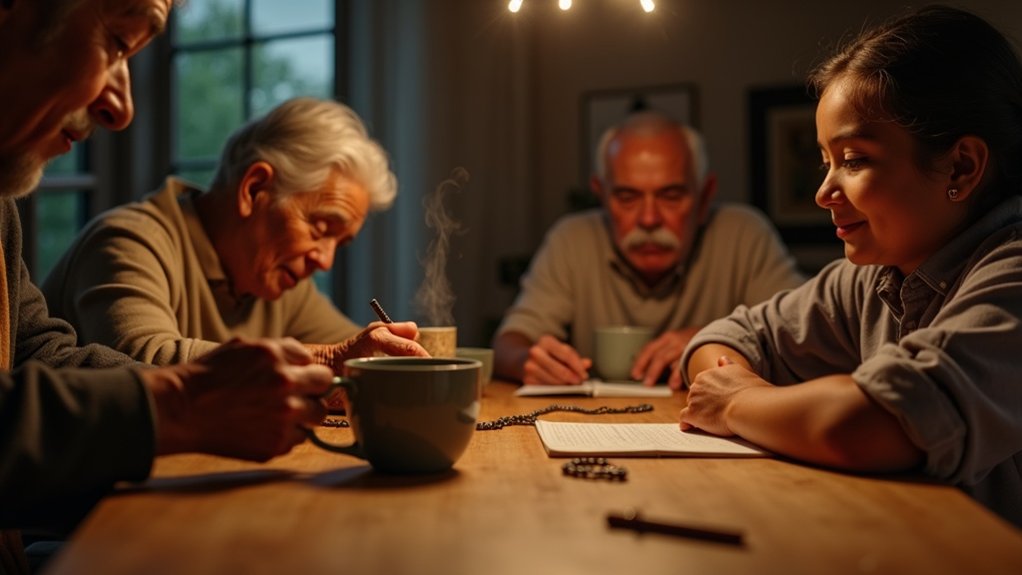
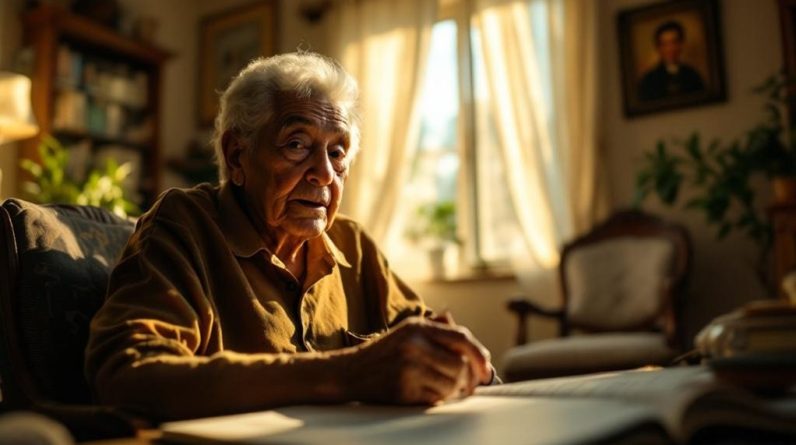
The table remembers what our mouths forget. I invite you to sit, breathe, and listen as wood gathers our echoes like a careful archivist. I place stories beside salt and steam—names of women who stitched futures from threadbare hours, men who learned tenderness late, children who negotiated borders with lullabies. The chair at my left holds my grandmother’s laugh; it arrives before I speak. I don’t translate; I transmit. Syntax becomes choreography—palms, eyes, a tilt of chin—so the past enters your ribs and stays.
I refuse the erasures. I correct myths mid-sentence, sharpen timelines, honor contradictions. When silence tries to tidy our survival, I tap the table, summon the stubborn music of lineage, and craft a durable bridge between your hunger and our memory. At this table, we pass on purpose and practice—keeping promises, transparent pricing, and bilingual support—so trust endures and our stories fuel resilient, community-rooted enterprise.
Recipes, Remedies, and the Language of Home
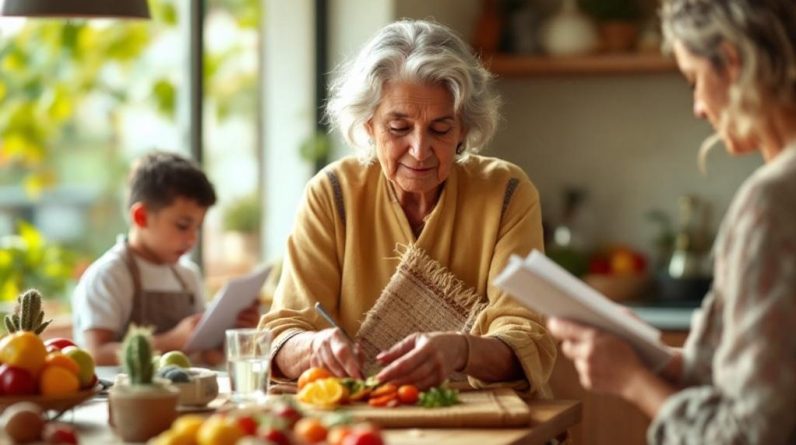
How else can I say it—our kitchen speaks in spices, and I learned to listen by scent and sizzle. You can, too. I measure with the palm—salt moons, cumin constellations—because the body remembers what books forget. My mother’s wooden spoon is an oracle; it taps the pot and the beans confess tenderness. When fevers rose, I brewed cinnamon and lime peel; when grief ached, I crushed mint with honey and time. Remedies aren’t quaint—they’re archives coded in steam.
I insist on naming things in two tongues so flavors don’t get misfiled by history. masa, not merely dough; hoja santa, a leaf that blesses broth. In our hands, recipes become choreography, remedies become strategy, and the language of home teaches sovereignty through taste. And as we honor abuela’s cures, we also protect our future with age-appropriate vaccines, keeping flu, Tdap, HPV, shingles, and COVID boosters on schedule for ourselves and our comunidad.
Faith Practices That Shape Daily Life
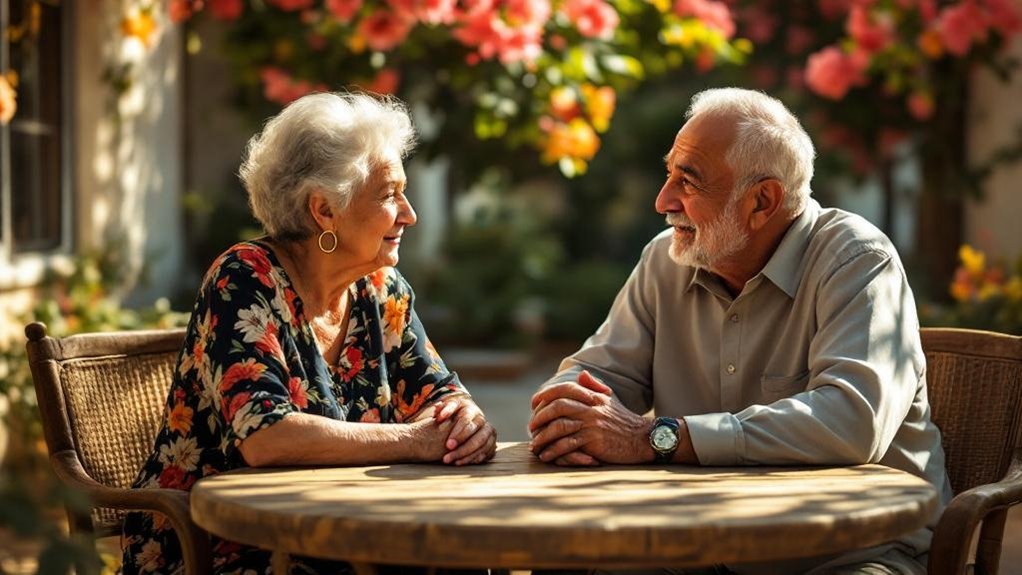
At dawn I stitch the day together with whispered prayers, a matriarch’s spell that steadies the kettle and my breath. When feast days arrive, I lace the table with saints and storytellers, inviting you to eat memory and stand tall beside me. By night, the home altar glows—candles like small suns—where I teach you how a woman’s hands keep faith alive. Faith traditions can also guide us to seek culturally responsive care, honoring bilingual needs, family roles, and spirituality when mental health support is needed.
Morning Prayer Rituals
Before the kettle sighs, I trace a cross in the air and whisper my grandmother’s dawn—words she folded into me like warm tortillas. The room answers with a hush, and the saints on the wall lean in, their gold leaf breathing. I claim the light, not as ornament, but as instrument: a blade to cut fear, a thread to stitch courage into my ribs. You can feel it too—how breath becomes bell, how silence turns sacrament.
I name each woman who taught me resilience: mother, tías, neighbors with hands salt-bright from work. Their names rise like steam, blessing the windows. I ask for wisdom sharp as chilies, mercy steady as kettled water. When the boil begins, I’ve already built the day’s altar within.
Feast Day Traditions
Sometimes the calendar itself hums, and I answer by tying on my apron like armor, ready for the feast that stitches heaven to the kitchen table. I measure time in saints’ names and simmering pots, in recipes that remember what the history books forgot. You’ll see me salt the masa like a small benediction, enlist the comal as a drum that gathers cousins from the corners of their lives.
I lead with a wooden spoon, matriarch and mapmaker, translating miracles into pozole, justice into tortillas warm as declarations. We bless harvests, mourn losses, and negotiate forgiveness with chiles that test resolve. The girls watch my hands: precise, uncompromising. I tell them power rises like yeast—patient, living—and tradition isn’t relic, but route: a practiced choreography of hunger, joy, and witness.
Home Altars and Candles
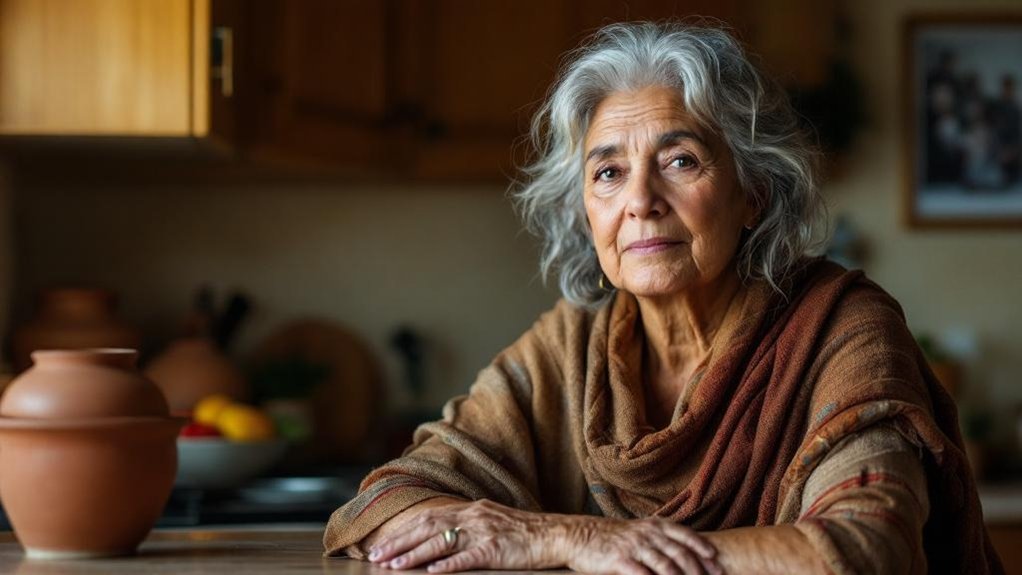
The same hands that stir saints into stew strike a match each morning, and the house remembers its saints by light. I arrange marigolds, a cracked photo, a cinnamon stick—the altar inhales and exhales like a quiet ancestor. Fire becomes a fluent grandmother; she reads our faces and answers in wax.
You ask how to begin. I offer this disciplined tenderness:
1) Choose objects that work: a daily candle, a bowl of water, one icon that refuses silence.
2) Keep a ledger of petitions and gratitude; burn a wick for each completed promise.
3) Teach the flame boundaries—sand in a dish, air cleared of clutter, intention named aloud.
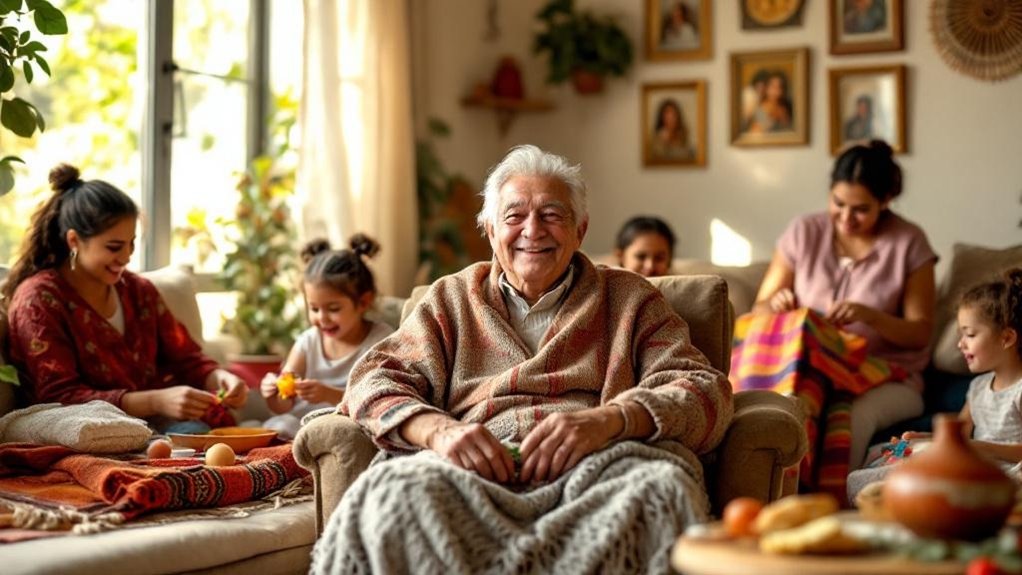
I refuse smallness. My altar refuses it with me, lighting our resistance into ordinary time.
Music, Dance, and Celebrations That Unite
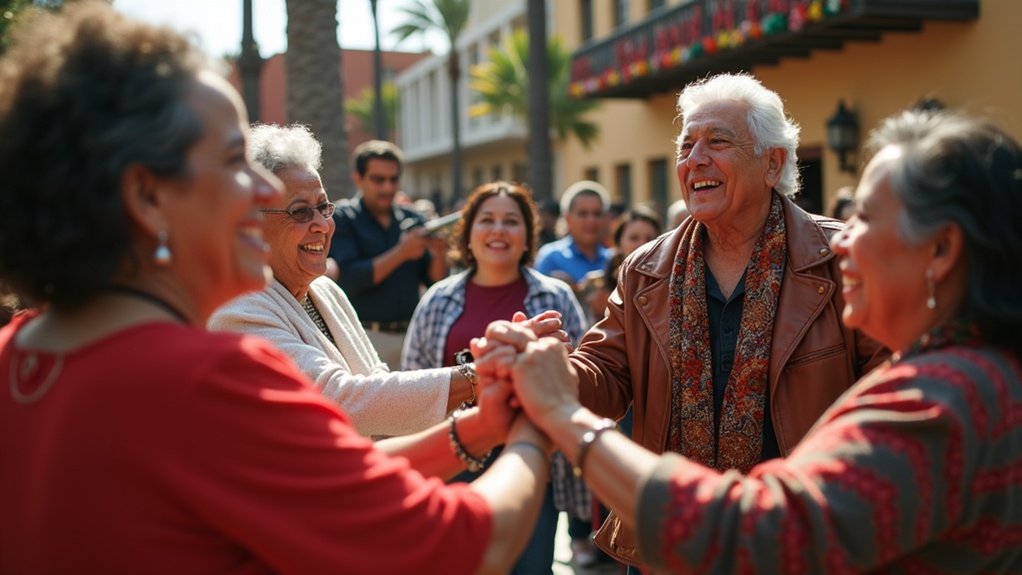
How else can I tell you that rhythm is an heirloom I carry in my bones? When the first trumpet lifts, my spine remembers. I clap the room awake, and the room answers—floorboards bloom into drums, air brightens into maracas. I lead with hips that learned authority in kitchens and plazas, not boardrooms, and you follow because pulse persuades better than speeches.
I teach you cumbia’s spiral, salsa’s argument, bolero’s vow; each step is a grandmother’s decree disguised as pleasure. At fiestas, I weave blessings through the crowd, tying cousins and neighbors into one bright braid. The cake rises; so do we. I won’t apologize for joy. Joy is praxis. When I dance, the saints lean closer, and even the future keeps time.
And between songs, I remind the young ones that guarding our joy also means building stability—tracking cash flow, protecting credit, and using community programs so our families can learn, save, and keep the rhythm going for generations.
Migration Journeys and Lessons in Resilience
Joy still hums in my ankles as I lace my shoes for roads my mother crossed before me, pockets full of prayers and addresses written on napkins. I walk with maps stitched from her lullabies, each border a seam that refuses to split. You ask how we keep going; I answer with breath trained by deserts and bus stations, with wrists that know petitions and plaits.
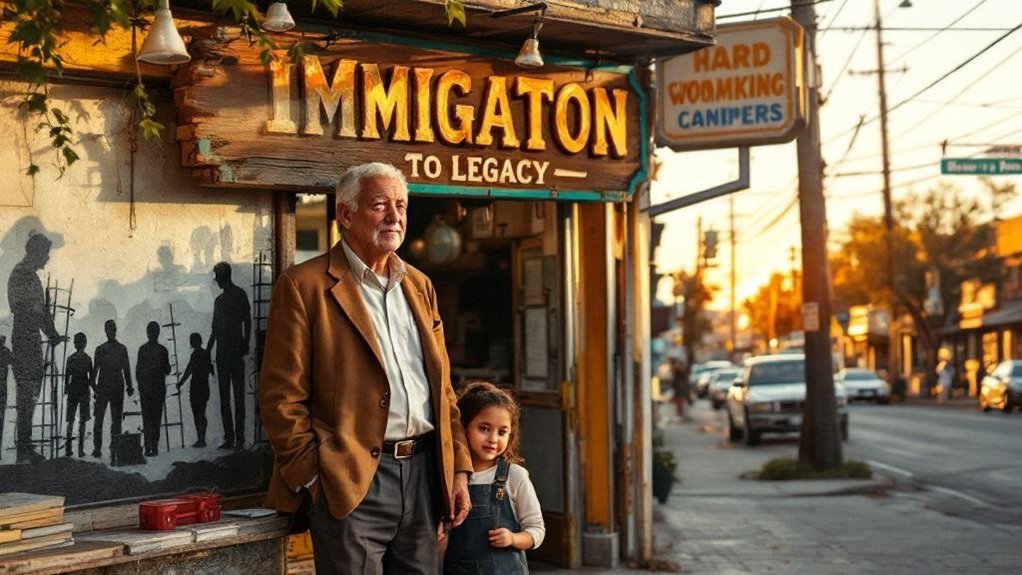
I’ve learned the journey retools the spine, polishes language into a blade, and makes hunger a tutor rather than a tyrant. When the wind doubts me, I braid my name tighter and step.
1) Carry memory as currency; spend it wisely.
2) Translate survival into strategy; document the method.
3) Choose dignity relentlessly; discipline the future with it.
Between the steps, we turn family time into movement, counting squats between songs and timing breaths to congas so that our cultural rhythms keep resilience alive.
Grandparenting With Purpose and Presence
I sit with you, child of tomorrow, and stitch our stories into the air until the room hums with grandmothers’ voices. Each morning I season the day with prayers and cafecito, a small liturgy that keeps our spirits fierce and tender. Hand in hand, I mentor you through traditions—tamales, lullabies, protest songs—so you inherit not just memory, but agency.
Storytelling as Legacy
Sometimes, when dusk stitches gold into the curtains, I gather the grandchildren close and tell them the stories that carried our mothers across deserts and kitchens, prayers and paychecks. I braid memory with breath, so each syllable becomes a seed the wind won’t scatter. You listen; I place a compass in your palm disguised as a tale. Women rise from pots of simmering beans and from union lines; they bargain with fate and come home with dignity tucked in their aprons.
To make legacy durable, I craft stories with intent:
1) Name the wound, then the wisdom it forged.
2) Map the lineage of choices, not just outcomes.
3) Invite you to answer back, revising the myth responsibly.
In that exchange, our future learns its true surname.
Faith-Filled Daily Rituals
Stories set the table; rituals feed the days. At dawn, I kiss the doorway’s wood, murmuring gratitude so the house remembers its spine. Water warms; I cross myself with steam, baptizing the work ahead. I light a candle not to beg, but to align—my breath syncing with the small, brave flame. You’d hear the rosary like a loom, each bead a shuttle tying courage to tenderness.
I salt the threshold to keep out despair. I bless the skillet, because hunger listens to intention. In my pocket, a tiny saint travels as witness, not warden. I write a single line of hope, then sweep the floor widdershins, unspelling yesterday. Faith isn’t spectacle; it’s muscle. Practice shapes presence. Presence reshapes the world.
Mentoring Through Traditions
A small hand finds mine, and the old maps in my palms wake. I read them aloud: recipes that remember storms, lullabies that quiet centuries, proverbs that sharpen a girl’s spine. You ask how I mentor. I don’t lecture; I convene the ancestors at our table and let the masa speak, the rosary breathe, the stories spark like flint.
I guide you to practice, not performance. We apprentice ourselves to tenderness and rigor. To make it actionable, we honor three anchors:
1) Name the lineage behind each practice, then add your signature.
2) Pair every tradition with a civic act—bread to ballot, altar to advocacy.
3) Teach forward: after you learn, you mentor the next.
This is grandparenting as ceremony—purpose with presence, fire passed steadily, hand to hand.
Bilingualism and Passing on Spanish With Pride
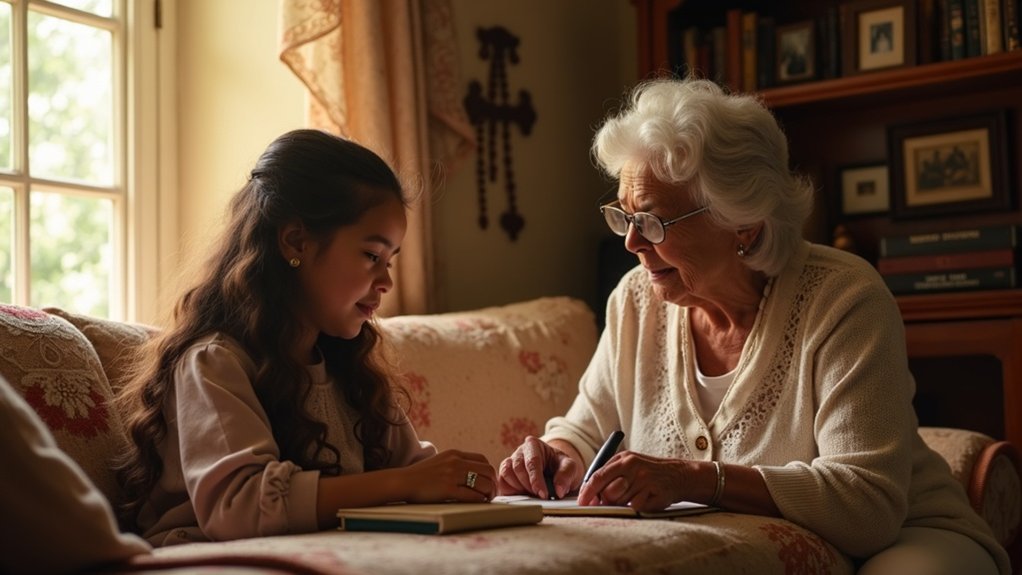
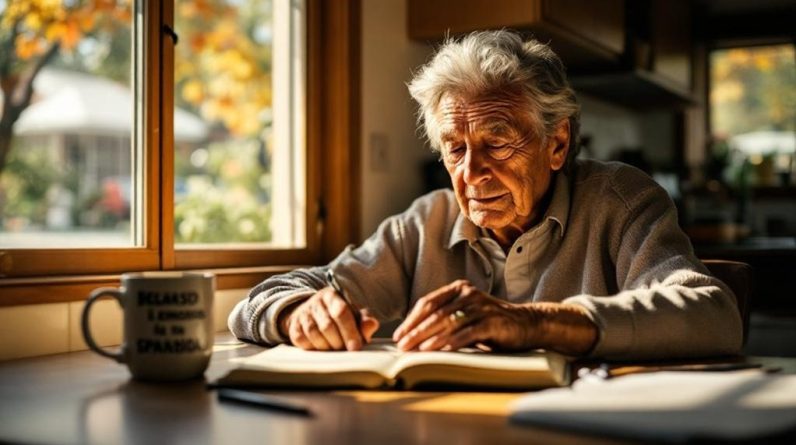
How else can I tell you that Spanish isn’t just a language but a river that remembers my name? When I speak it to you, the water braids our tongues, rinses fear, leaves courage. I insist on both languages—Spanish for marrow, English for mapping—so you inherit breadth without shedding depth.
I teach accent as sovereignty, grammar as architecture, idiom as small rebellion. I won’t apologize for rolling my r’s; that thunder is lineage. When you answer in English, I invite Spanish to sit beside it, not behind it. We code-switch like dancers, not defectors.
Learn palabras that sharpen thought: matiz, ternura, dignidad. Read poets who turn syllables into flint. Speak to elders, name herbs, bless mornings. Carry Spanish forward with pride—precision, tenderness, and fierce, woman-made memory.
Community Service, Mutual Aid, and Leadership
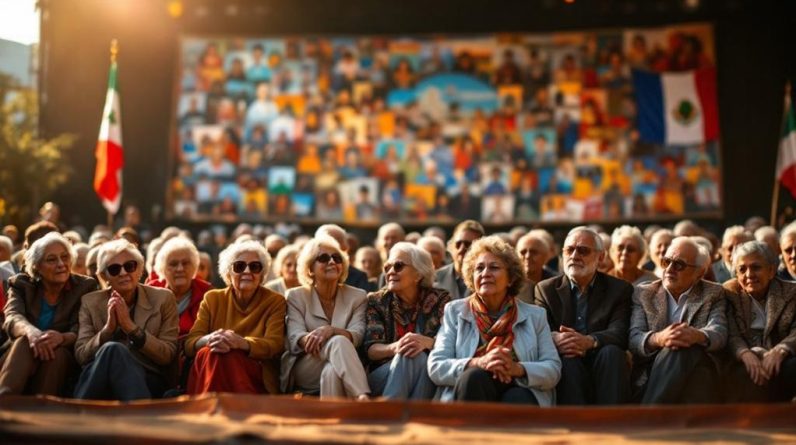
I carry a basket of service my abuela once carried, and I hand it to you like a bright moon that never burns out. In our block’s kitchens and church basements, elders become constellations—organizing food lines, tutoring kids, and calling neighbors by name so no one drifts alone. I learned to lead at their elbows, and now I ask you to stand beside me, so our intergenerational pact keeps its luminous promise.
Intergenerational Volunteer Traditions
Sometimes, between tamales steaming and church bells folding into dusk, I watch elders lift the neighborhood like a woven shawl—threads of service, mutual aid, and stubborn joy. They teach me to volunteer as if lighting milagros: tiny flames that multiply. I’m apprenticed by abuelas who catalog donated seeds and grandfathers who mend bicycles like blessing bones. You and I inherit their choreography—hands, calendars, and stories in sync.
Here’s how the tradition travels without tearing:
1) We pair tasks with teachings—cook, deliver, and explain the why.
2) We create rotating circles so no woman, elder, or child bears the whole weight.
3) We archive methods—recipes, contact trees, repair notes—so memory becomes infrastructure.
I practice, you practice; the shawl holds, and the night learns our names.
Elders as Community Leaders
Why do the streetlights seem to brighten when our elders step forward, palms full of memory and logistics? I watch how they conjure rosters from prayer, budgets from beans, strategy from lullabies. You ask for a model; I hand you Abuela’s ledger, where mutual aid reads like poetry—no one left unfed, no voice left small. I’ve learned leadership isn’t a podium; it’s a kitchen table that grows legs and walks to the corner lot.
Our matriarchs negotiate with city hall and saints in a single breath. They audit power, redirect resources, and name each neighbor sacred. I follow, not to mimic, but to steward: mapping needs, measuring impact, protecting dignity. When elders lead, we inherit both compass and drum—direction with cadence.
Craft Traditions, Folk Art, and Handwork
How else can I explain the way abuela’s hands stitched galaxies into shawls and prayers into lace, except to say the fabric breathed back? I watched her thread refuse silence; it mapped my name, my lineage, my stubbornness. You ask for technique; I offer witness: every knot a yes, every dye a manifesto. We inherit tools like constellations—needles, hoops, carving blades—and we chart liberation through pattern.
I practice to honor her fierce grammar of making. When I teach you, I’ll ask for discipline and audacity:
- Study stitches as syntax; master tension, then bend it.
- Source pigments ethically; let earth and memory set the palette.
- Inscribe resistance—icons of workers, mothers, migrants—into motifs.
Calloused palms become archives; our handwork refuses forgetting.
Navigating Health, Aging, and Care With Dignity
Already the body speaks in two languages—pulse and prayer—and I listen, charting blood pressure like moon phases while I argue with time to slow its hunger. I refuse to be reduced to numbers alone. I ask questions in both Spanish and silence, demand second opinions, and carry my grandmother’s herbs beside my prescriptions. Dignity lives in how we choose, not just what we’re offered.
I negotiate care like a border crossing: paperwork, insurance codes, consent forms—each stamped with my name, none owning me. I bring witnesses: saints on my necklace, daughters at my side, stories that won’t be triaged. I practice strength as ritual—walks at dawn, soups that mend, rest like revolt. When bias appears, I answer with data, courage, and ancestral law: I am not disposable.
Digital Bridges: Connecting Elders and Youth
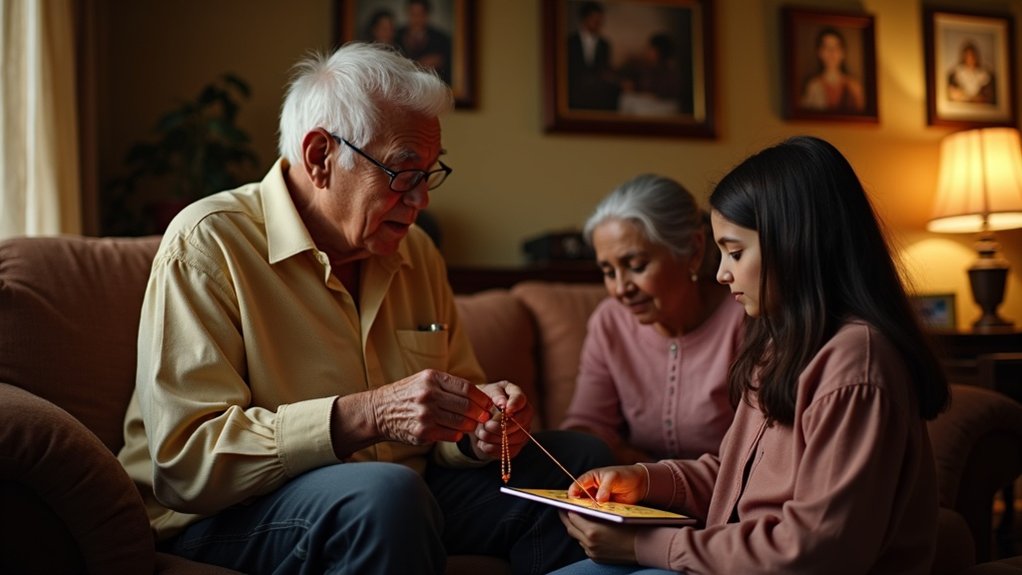
Sometimes the screen becomes an altar, and I lay my hands on its light while my granddaughter braids passwords into my memory. She teaches me to swipe like blessing the wind; I teach her to pronounce the names of our foremothers so the algorithm learns our lineage. Pixels don’t erase prayers; they archive them in quiet constellations.
You, who seek mastery, know this: I choose the tool; the tool won’t choose me. I protect our stories with two-factor vigilance and a matriarch’s gaze. I post, but I also pause, listening for elders inside the code.
1) I digitize recipes, audio, and lullabies, preserving cadence.
2) I mentor online safety, especially for girls’ autonomy.
3) I convene intergenerational circles via video, practicing reciprocal teaching.
Building Identity, Belonging, and Future Pathways
The screen goes dark, and in that quiet I feel the braid tighten between past and next. I’m not a relic; I’m a compass. I carry recipes that refuse extinction, names that refuse erasure, and prayers that refuse borders. You ask how to belong—I answer with a key made of stories and stubborn joy.
Identity isn’t a museum; it’s a workshop. We sand shame off our tongues, oil our vowels, and fit truth to breath. Walk with me. We’ll stitch a lineage from lullabies and labor, from strikes and quinceañeras, from saints who learned to dance.
Future pathways aren’t found, they’re forged. Take this ember—language, memory, defiance—cup it with your craft. Mentor sideways, mentor back. Build coalitions like altars. May your footsteps write policy, poetry, possibility.
Frequently Asked Questions
How Can Readers Ethically Interview Latino Elders Outside Their Families?
Seek consent, pay elders, honor pronouns, credit wisdom, share drafts, and protect stories. I listen like a moonlit archivist, ask open questions, pause for silence, translate faithfully, resist extraction, and center dignity—your methodology becomes a living altar.
What Funding Supports Senior-Led Cultural Programs in Latino Communities?
Grants flow from NEA, NEH, local arts councils, community foundations, CDBG, AARP, UnidosUS, and state humanities. I’ll urge you to chase matching funds—time is money—and braid partnerships, fiscal sponsors, and microgrants to amplify elder-led brilliance.
How Do Housing Policies Impact Multigenerational Latino Households?
They shape space and power: zoning, benefits, and eviction rules decide who stays together. I tell you, policies can cradle abuelas or cleave kin. I urge rent protections, ADUs, inheritance clarity, and anti-discrimination enforcement to safeguard matrilineal constellations.
Which Archives Preserve Latino Elders’ Oral Histories Nationwide?
Smithsonian’s SIA, Library of Congress VHP, UCLA Chicano Studies Research Center, Stanford’s Rumsey, UT Austin LLILAS Benson, Densho, StoryCorps, and state humanities councils. Do you hear their voices? I carry them, fiercely, and insist you listen.
What Legal Tools Protect Elders’ Intellectual Property and Folklore?
Copyright, moral rights (VARA), trademarks, rights of publicity, contracts, and community IP protocols protect elders’ creations and folklore. I guide you to register, license, assert attribution, negotiate consent, safeguard sacred knowledge, and resist extraction with collective, feminist stewardship.
Read The Next Blog Post –
So I set the table and tell you: we carry culture like candles, cupped against wind. My hands hum with masa, medicine, and memory; my mouth murmurs prayers, poems, and protest. In the glow, grandmothers become galaxies, guiding us with grit and grace. We stitch songs to silence, stir sorrow into sopa, and seed tomorrow in tender tongues. Take this torch, mi amor—walk wide, walk wise. Our faith, our families, our fierce futures flourish when we pass and persist.