


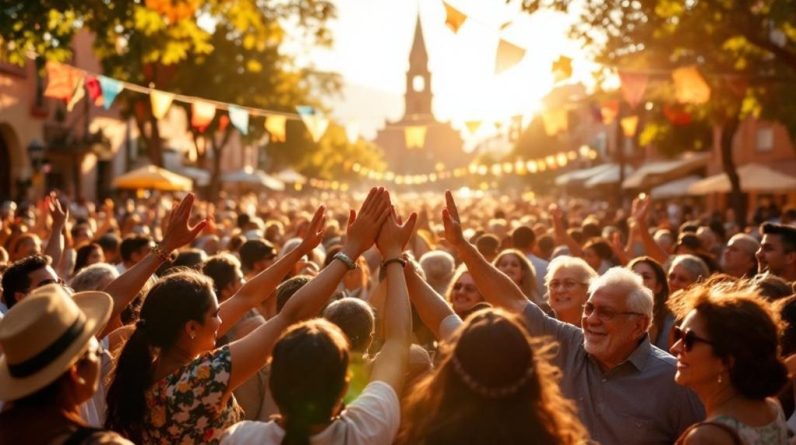
At my grandmother’s table, a cracked molcajete held more family names than stone—each spice a border crossed, each grind a prayer. I carry those flavors like maps: Taíno whispers, Yoruba drumbeats, rosaries tangled with protest chants. I’ve watched bus drivers bless dawn with headlights, and children rename streets after saints no church canonized. Mercy here is practiced, not posed; a rhythm of shared pots and lifted hands. But tonight, one rhythm falters, asking us why.
Main Points
- Unity flows from intertwined Indigenous, Afro-Latin, and Christian currents, where reciprocity, ceremony, and rhythm teach kinship beyond borders.
- Comunidad is sacred practice: shared meals, mutual aid, and fiestas transform scarcity into communal abundance and belonging.
- Justice is devotion: hospitality, solidarity, and collective healing make policy resistance a spiritual duty to protect every name and story.
- Charismatic, Catholic, and Protestant traditions braid reverence and action, seeking fire without smoke and order without shackles.
- Daily rituals—greetings, prayers, songs, and stories—forge a steady metronome of kinship, resisting erasure and affirming one human family.
Ancestral Threads: Indigenous and Afro-Latin Roots

How do I trace the pulse beneath my skin back to braids of earth and ocean? I listen. Corn whispers its geometry into my breath, and drums translate moonlight into memory. I carry maps tattooed by wind: Taino salt, Maya numerals, Quechua altitude, Yoruba thunder. You know this cadence—the body remembers before the mind consents.
I walk into markets where elders bargain with time, where cacao smolders like a proverb. The ancestors teach method: reciprocity as law, ceremony as governance, rhythm as archive. I inherit strategies for dignity—maroon paths, woven codes, songs that outpace empire. When I greet you, I’m convening councils of rivers and ash. Together we practice a precise tenderness: naming land, naming wound, naming future. My breath counts, your breath answers.
Faith in Motion: Catholic, Protestant, and Charismatic Currents
When did my pulse learn to kneel and march at once? I remember incense braiding with slogans, rosaries clicking like rain on tin roofs. Catholic bells taught me rhythm; Protestant hymns taught me spine. Then the Charismatic wind arrived—tongues like sparrows, prophecy like thunder stitched with mercy. I walk you through these currents as a river with three names, converging under one sky. Saints stand beside street organizers; pastors annotate scripture with border-crossing ink; worship becomes a workshop for liberation. I won’t trade mystery for obedience, nor fervor for forgetting. I want discernment: fire without smoke, order without shackles.
- Trace your lineage of prayer and protest.
- Compare altars, pulpits, and circles.
- Test spirits; verify fruits.
- Map texts onto struggles.
- Keep wonder operational and accountable.
Comunidad as Sacred Practice: Family, Fiesta, and Mutual Care
Sometimes a neighborhood breathes like a cathedral, and I swear abuelas’ kitchens ring with bells no clock can command. I learned liturgy in the sizzle of onions, in the novena of stirring pots, where stories season rice and grief softens like beans. You know this pulse: family isn’t a border; it’s an altar crowded with photos and mismatched chairs.

I’ve watched fiesta turn scarcity into surplus—paper flowers multiplying like loaves, a borrowed speaker summoning saints from vinyl. We practice theology by passing plates, counting everyone, refusing to let anyone eat alone. The children run like incense, carrying future and rumor.
Mutual care is our grammar: rides at dawn, envelopes slipped discreetly, hands steadying tremor. We rehearse survival as ceremony—and call it comunidad.
Justice as Devotion: Hospitality, Solidarity, and Healing Across Borders

Already the border blurs like chalk in rain, and I step toward you with a pot of caldo and a pocket of names the wind tried to erase. I ladle heat into cold hands and call it justice—devotion with a spoon, prayer with open doors. Barbed wire remembers screams; I answer with blankets and witness. When authorities rename hunger “policy,” I answer with solidarity, a vow stitched from my grandmother’s rosary and my father’s worn boots. Healing arrives like dawn—slow, undeniable—when we refuse to let grief be privatized. I hold your story, and it steadies mine. Together, we practice a fierce hospitality that turns checkpoints into thresholds, and papers into promises.
- Carry one name
- Cook one meal
- Learn one law
- Join one case
- Guard one hope
Rhythms of Belonging: Everyday Rituals That Bind the Human Family
How does a day begin if not with small spells we repeat until they become kinship? I grind coffee like a drumbeat, whisper names of the living and the dead, and the kitchen brightens—saints hiding in steam. You, too, carry choreography: a nod to the bus driver, a text to your cousin abroad, a quiet yes to the body that keeps going. These rituals aren’t quaint—they’re strategy, countering erasure. My grandmother crossed deserts with rosary and recipes; I cross timelines with playlists and protest chants. We pass bread, passwords, and stories, braiding survival into ceremony. When I clasp your gaze in a meeting or a march, I feel the planet’s metronome steady. Belonging isn’t abstract. It’s practiced breath. It’s repeated until it holds.
Frequently Asked Questions
How Do Digital Platforms Shape Contemporary Latino Spiritual Unity?
They braid our prayers into networks, I tell you, scripting altars through hashtags and livestreams. I navigate memes like milagros, archive struggle, convene ancestors in comments, weaponize ceremony, and translate silence into strategy—so our scattered candles burn as one vigilant constellation.
What Role Do Lgbtq+ Experiences Play in Latino Spirituality Narratives?

They illuminate resistance, tenderness, and chosen kinship. What else threads prayers tighter than outlaw joy? I speak to you: I stitch saints with sequins, remember erased lovers, politicize altars, and conjure futures where desire sanctifies, survival testifies, and liberation sings.
How Is Environmental Stewardship Framed Within Latino Spiritual Cosmologies?
It’s framed as kinship obligations: I tend altars of soil and river, remembering treaties and sugarcane strikes. I tell you, stewardship’s ceremony and resistance—saints, ceibas, and wind conspire, insisting we repair reciprocity or inherit ash-scented dawns.
How Do Migration Detention Experiences Reshape Personal Theologies of Belonging?
By chance and border, I learned belonging isn’t granted; it’s forged. In detention’s fluorescent midnight, I stitched prayer to number, breath to barcode. You’ll feel it too: rites become refusals, faith migrates, and home relocates inside witness.
What Are Youth Perspectives on Syncretism in Hybrid Urban Communities?
They see syncretism as living circuitry—rituals remixing alleyway beats and grandmother spells. I hear them claim authorship: we code-switch cosmologies, archive graffiti prayers, hack saints with sneakers, insist borders blur, and craft belonging that outpaces police, pews, and algorithms.
Read The Next Blog Post –
So I leave you at the doorway, palm over heart, like Odysseus tracing constellations home, like Macondo’s rain remembering names. I’ve danced with saints in bus aisles and stirred stew that forgave the day. If you listen, you’ll hear our drum teaching borders to breathe. I’m just one voice in the coro, but I swear: mercy is a verb, belonging a recipe. Come, bring your wound and your whistle. We’ll trade stories, and call it prayer.


