


Between the clang of a skillet and a whispered rosary, I find a chapel stitched into our days. I write to you from kitchens where tortillas puff like prayers, from porches where songs braid names to memory. My elders bless the caldo and my future, and I carry both down cracked sidewalks that remember. In this weave of saints and cousins, incense and cilantro, we learn resilience by heart—yet there’s a secret the streetlights keep.
Main Points
- Daily rituals around food and music turn homes and streets into sacred spaces, blending faith with cultural practice.
- Ancestor remembrance grounds identity, linking family stories to spiritual values and communal responsibility.
- Shared ceremonies—rosaries, processions, and blessings—embed faith within family routines and celebrations.
- Community solidarity transforms hardship into collective resilience, expressing justice, hospitality, and dignity as spiritual commitments.
- Elders transmit belief through stories, language, and gestures, uniting generations in a living tradition of faith.
Traditions That Live at Home and in the Streets
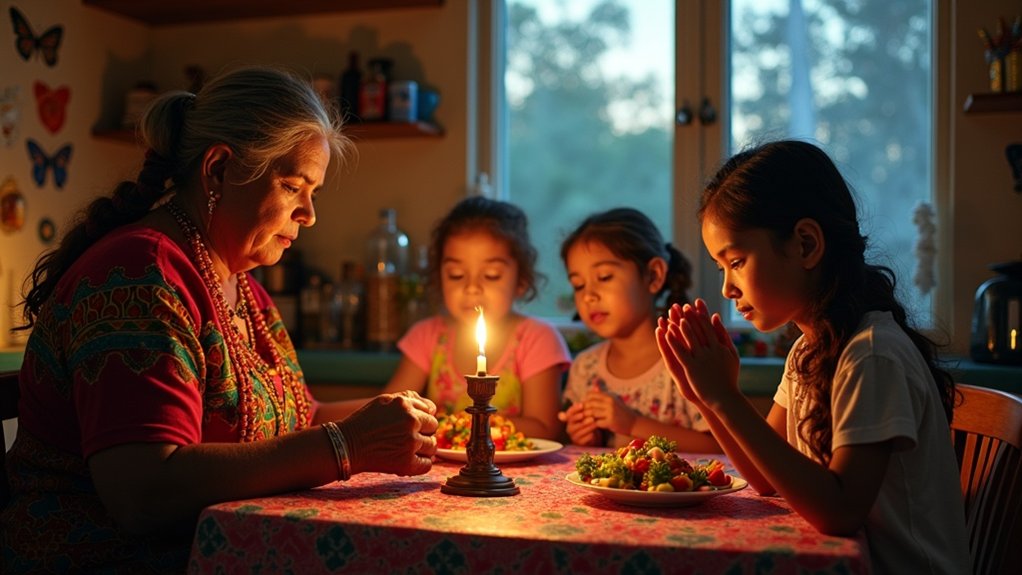
How else can I explain the way a saint’s candle flickers in our kitchen while the street outside drums with a cumbia beat? I move between both tempos, stirring beans as trumpets braid the air. The pot whispers lessons my abuela folded into masa: measure with your palm, bless with your breath, keep watch for omens in steam. I step outside and the block becomes a chapel—vendors chant prices like psalms, papel picado translates wind into doctrine, and lowriders glide like processions.
I’m not choosing between stove and sidewalk; I’m apprenticing to both. The house trains my hands, the street tests my timing. You know this calibration—the skill of listening twice, once to the flame, once to the city’s satisfied heart.
Honoring Ancestors and Strengthening Identity
Sometimes the past knocks like a gentle fist on the table, and I set another plate. I greet the unseen with my name, offered like a candle, and listen for theirs. In that hush, identity threads itself through me—braids of language, stubborn courage, and long-tested tenderness. I don’t pretend the lineage is flawless; I negotiate with its shadows and accept its light, apprenticed to both.
Reader, I practice remembrance as discipline. I call each forebear a teacher, and they lend me a spine made of stories. Their mistakes map boundaries; their vows chart routes. When my resolve thins, they lift it like a shawl. Honoring them isn’t nostalgia; it’s calibration. I become precise in who I am, so I can stand true where history placed me.
Music, Food, and Ritual as Sacred Connection

I carry that calibrated name to the kitchen and the porch, where sound and scent keep watch. I invite you to listen: the guitarrón hums like a furnace of memory, claves stitch light into the evening, and the drumline of footsteps sets the table’s pulse. I salt beans as if blessing them; steam rises, negotiating with history.
When I ladle caldo, I’m translating—oregano into remembrance, cumin into counsel. You taste broth; I hear my grandmother counting rosary beads between bubbles. We pass tortillas like small moons, turning hands into liturgy. Even silence keeps rhythm, a pause that consecrates breath.
Ritual isn’t an artifact; it’s a living grammar. I plate devotion, pour harmony, and we eat our way toward alignment, each bite a measured vow.
Resilience Through Community and Shared Values
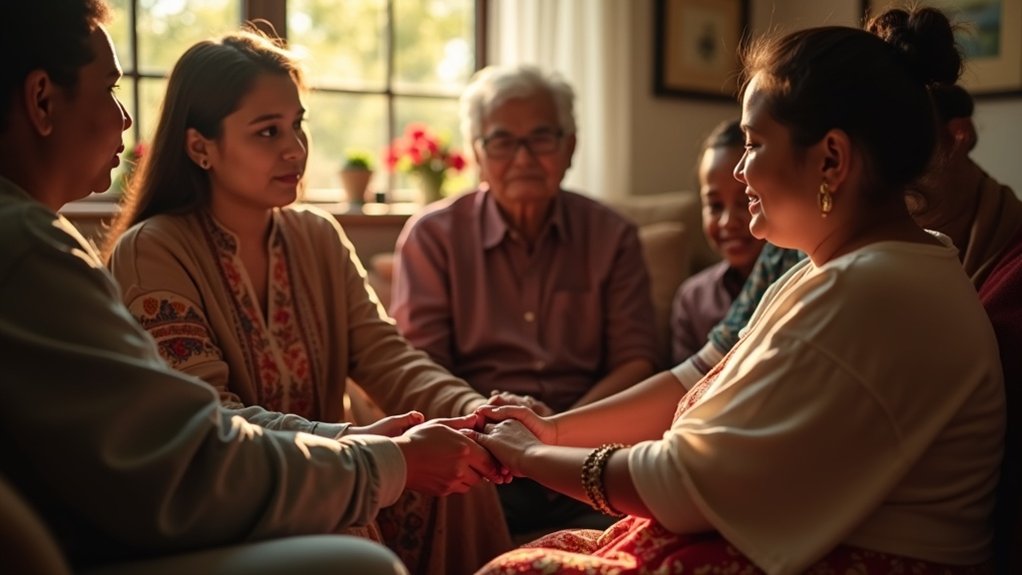
Where else could I learn to bend without breaking but in the circle of our people, where stories braid like sweetgrass and hold? I’m speaking to you as one who’s been carried by that weave. Our resilience isn’t a slogan; it’s a practiced choreography—hands passing bowls, names, and burdens with the same steady cadence. When deserts flare or markets sour, we don’t scatter; we thicken, like caldo on a slow flame.
Shared values make the marrow: dignity in labor, hospitality as sacrament, justice as a daily vow. I’ve watched neighbors turn scarcity into banquet, fear into vigil, grief into chorus. We rehearse hope together until it remembers us. In that collective musculature, I find my stance—soft-spined, iron-ribbed, ready to lift what’s heavy and remain whole.
Passing the Faith: Elders, Stories, and Daily Practice

Even before dawn lifts its shawl, the elders whisper the day awake, and I lean in to catch the thread. Their rosaries tick like rain on tin, counting not just prayers but years, migrations, and stubborn hope. I watch their hands bless tortillas, altar candles, and my forehead, teaching me that faith lives in gestures before it speaks in doctrine.
You ask how to keep it alive. I answer with practice: name your dead at breakfast, stitch gratitude into chores, let saints borrow your shoes when courage falters. Memorize one story each week; repeat it until it ripens into counsel. Carry silence like a river stone. Then, when night exhales, pass it on—warm, exact, and humming with the breath that carried you.
Frequently Asked Questions
How Do Immigration Policies Affect Latino Spiritual Expression in Public Spaces?
They narrow rituals’ footprints, I’ll admit, yet we improvise. Policies hush candles and drums in plazas, so I braid prayers into parades, kitchens, and quiet corners—ancestral murmurs slipping past polite fences, teaching you precision, resilience, and luminous, lawful presence.
What Role Do Lgbtq+ Latinos Play in Evolving Spiritual Practices?
They summon new rites; I witness them braid queerness with abuela’s rosary, transmute altars into living archives. I tell you: they expand kinship, revise myths, midwife inclusive devotions, and teach us to steward spirit like orchards bearing unexpected, dazzling fruit.
How Is Technology Reshaping Intergenerational Faith Communication in Latino Families?
Technology reshapes our intergenerational faith by braiding abuela’s whispered prayers with my glowing screen; I host Zoom novenas, archive blessings as voice notes, translate saints’ stories in group chats, and you learn rites through livestreams, where pixels carry incense and memory.
How Do Latino Spiritualities Interact With Environmental Justice Movements?

They braid seamlessly: I join land-blessing rituals with policy advocacy, invoking Pachamama and Guadalupe. You’ll see prayer become praxis, saints walking beside organizers, rivers treated as kin, climate data sung like corridos, and stewardship inherited like abuela’s recipes—tender, resistant, inexhaustible.
What Differences Exist Between Urban and Rural Latino Spiritual Experiences?
Urban spirituality hums through storefront saints and activist vigils; rural faith breathes with land, ancestral graves, rain rites. I test this living theory: your prayers shape neighborhoods; mine till furrows of memory—each miracle negotiates migration, kinship, and place-bound obligation.
Read The Next Blog Post –
So I leave you here, where tortillas steam like prayers and guitars stitch dusk to dawn, and I swear I can hear my abuela’s rosary counting stars. In kitchens and on corners, our names bloom, our stories braid—bread, song, and blessing. The streetlamp becomes an altar; the sidewalk, a procession. If you listen, you’ll taste memory. If you look, you’ll see tomorrow. I carry it all—family, culture, faith—like a lantern that refuses to go out.


