You carry stories in your bones, and creative practice gives them shape. When you paint, drum, or move, memory finds rhythm, breath steadies your nerves, and community offers witness without pressure. Circles and workshops become containers for consent and care, where color, sound, and gesture translate what’s hard to say. As identity gathers through pulse and palette, you begin to reclaim time—and notice what happens when your body finally answers back…
Main Points
- Creative practices like drawing, drumming, and dance safely move stored sensations, reducing stress and building body literacy and resilience.
- Steady communal rhythms and chanting synchronize breath, lower vigilance, and create trustful spaces for grief, care, and joy.
- Structured storytelling across mediums turns pain into shared meaning, resisting erasure while protecting boundaries and truth.
- Visual arts, movement, and soundscapes translate memory and identity into form, anchoring collective healing and belonging.
- Workshops with clear consent, rotating leadership, and reflective closure foster co-creation, pattern recognition, and repair.
The Body Remembers: Creative Practice as Somatic Repair
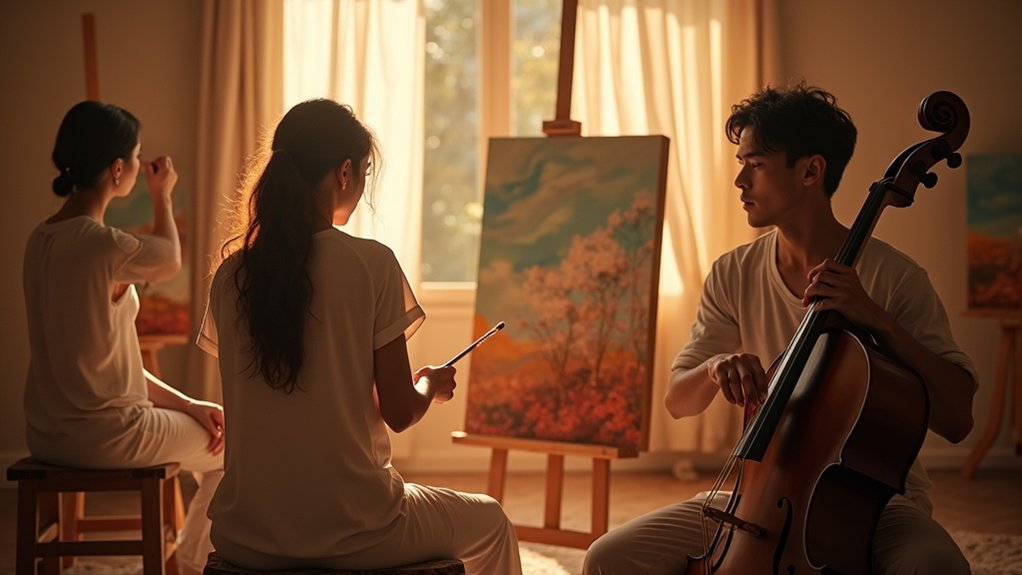
How does your body carry stories your mind can’t quite name? You notice tight shoulders, a fluttering gut, or a breath that won’t deepen. These aren’t random; they’re traces of experience. When you draw, drum, hum, dance, or shape clay, you give those traces a safe path to move. You’re not forcing meaning—you’re letting sensation lead.
Begin small. Match your breath to a simple rhythm, then let your hands follow. Choose colors that mirror your mood, or steps that meet your pulse. Pause and scan: jaw, chest, belly, hips. Where softens? Where brightens? Adjust tempo, pressure, or space accordingly.
You build trust with repetition. Over time, your nervous system learns alternatives to bracing. Creative practice becomes body literacy—and repair grows possible.
From Trauma to Testimony: Storytelling Across Mediums
You turn your story into a stance, using narrative as resistance against silence and erasure. When you paint, rap, or stitch a quilt, you transform pain into voice that others can hear and hold. Across mediums, you choose form as strategy, reclaiming power with each word, beat, and image.
Narrative as Resistance

Even when words feel dangerous, telling a story can turn fracture into form. You refuse erasure when you narrate what happened, how it felt, and what it changed. Your account challenges official versions that skip over pain, and it interrupts myths that blame survivors. By naming events, places, and choices, you reclaim time and context. You also make patterns visible—how harm travels through systems, not just moments.
When you choose the frame, you set the terms of meaning. You decide what to reveal, what to protect, and what requires witnesses. That agency resists silence and spectacle alike. Through diaries, zines, oral histories, and community archives, you build memory that can’t be easily revised. Your narrative becomes a living record, sturdy enough to stand and be heard.
Transforming Pain Into Voice
Though pain can feel unspeakable, it still shapes language when you let it move. You don’t have to force eloquence; you invite it. Start by naming sensations, images, and fragments. Let rhythm carry what sentences can’t. When you translate hurt into voice, you convert isolation into relation. Your story doesn’t erase wounds; it teaches you to breathe around them and speak through them.
- Map the moment: note body cues, sounds, colors, and textures; anchor memory in sensory detail to steady recall.
- Shift mediums: write, sing, draw, dance; let each form reveal a facet the others hide.
- Craft containers: use structure—stanzas, scenes, refrains—to hold intensity without overflow.
- Share with care: choose witnesses, set boundaries, invite response that honors safety and truth.
Rhythm as Remedy: Drumming, Chant, and Collective Pulse
You feel a communal heartbeat when drums sync your breath with others, bonding you beyond words. Steady rhythms can lead you into light trance states, loosening stress and sharpening focus. When you chant, you train resilience—repeating sound becomes a steady anchor you can carry into daily struggles.
Communal Heartbeat Bonding
How does a shared beat turn strangers into kin? You feel it first in your chest: a pulse that meets another pulse and settles into sync. When you drum, clap, or hum together, your body entrains—heart rate, breath, and movement align. That alignment lowers vigilance, builds trust, and opens space for honest connection. You’re not just making sound; you’re making a temporary “we,” a safe container for care, grief, and joy.
- Begin with breath: exhale together, then add a simple pattern at a comfortable tempo (60–80 bpm).
- Rotate leadership: let each person seed a motif; the group echoes, then resolves.
- Use call-and-response to balance individuality and unity without overpowering voices.
- Close with silence: share brief reflections to anchor insight into daily life.
Trance States Through Rhythm
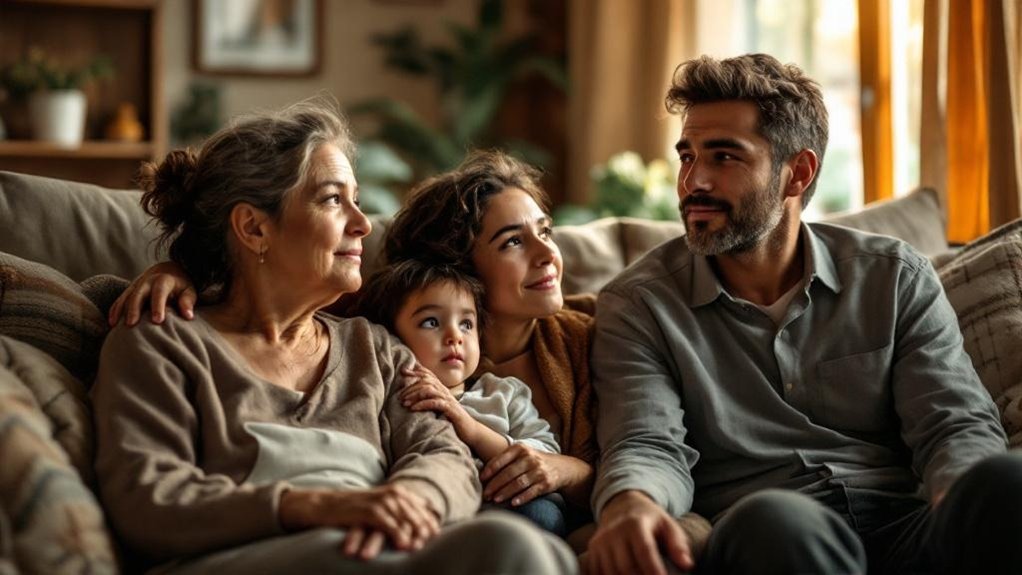
When steady rhythm narrows your attention and softens the edges of time, trance emerges as a focused, embodied calm. You don’t disappear; you arrive. Repetition gathers scattered thoughts, gives your breath a metronome, and eases your nervous system toward balance. In this state, sensations feel clearer, worries loosen, and you access steady presence rather than escape.
You can enter through simple beats: hand-to-skin drumming, foot taps, or claps. Keep tempo consistent, start slow, and let your body entrain—heart, breath, and muscles syncing to pulse. Notice micro-shifts: shoulders dropping, jaw unclenching, vision widening. If emotions surface, stay with the beat and breathe. Set a duration, then close gently: soften volume, lengthen pauses, feel the room. You’ll return alert, grounded, and quietly energized.
Chanting for Resilience
As rhythm steadies the body, voice turns pulse into language. You chant to regulate breath, entrain your heart rate, and ground attention. Repetition becomes a scaffold: words, tones, and pauses align your nervous system with a steady beat. When you chant with others, synchrony amplifies safety; when you chant alone, it cultivates steadiness you can carry into stress.
- Choose a phrase with meaning and cadence. Keep it short, vowel-rich, and easily sustained; test how it feels across several breaths.
- Set tempo to a resting pulse (60–80 bpm). Tap lightly or use a drum; let your breath ride the beat.
- Alternate call-and-response to build cohesion and reduce vocal strain.
- Close with silence. Notice aftereffects: warmth, clarity, and softened reactivity.
Colors of Resilience: Visual Arts in Community Healing
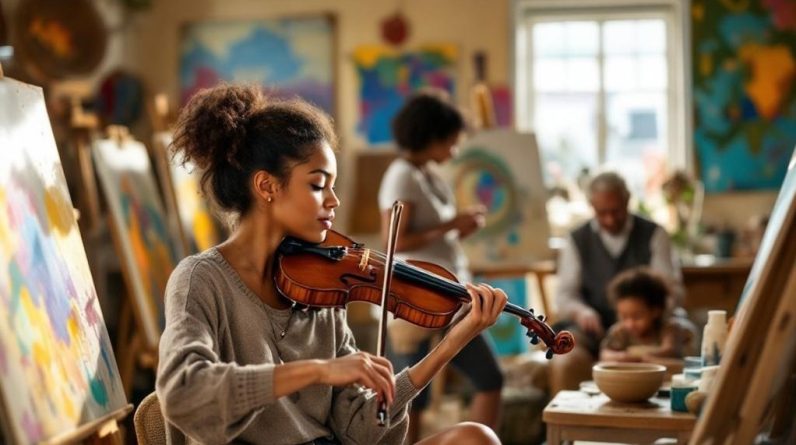
Many brushes, murals, and handmade zines become more than objects—they’re anchors for collective healing. When you paint with neighbors, you translate grief, pride, and memory into color and shape. You don’t need formal training; you need an honest story and a space to share it. Murals reclaim walls with images of ancestors, local heroes, and everyday joy, reminding you that resilience isn’t abstract—it’s visible.
You can host pop-up art tables, invite elders to share symbols, and create zines that circulate practical wisdom. Collage lets you piece together fragments, showing that broken parts can form a new whole. By choosing palettes that echo land and heritage, you affirm belonging. In critique circles, you practice listening, restore trust, and leave with tools to keep creating.
Movement Speaks: Dance, Ritual, and Reclaiming Space
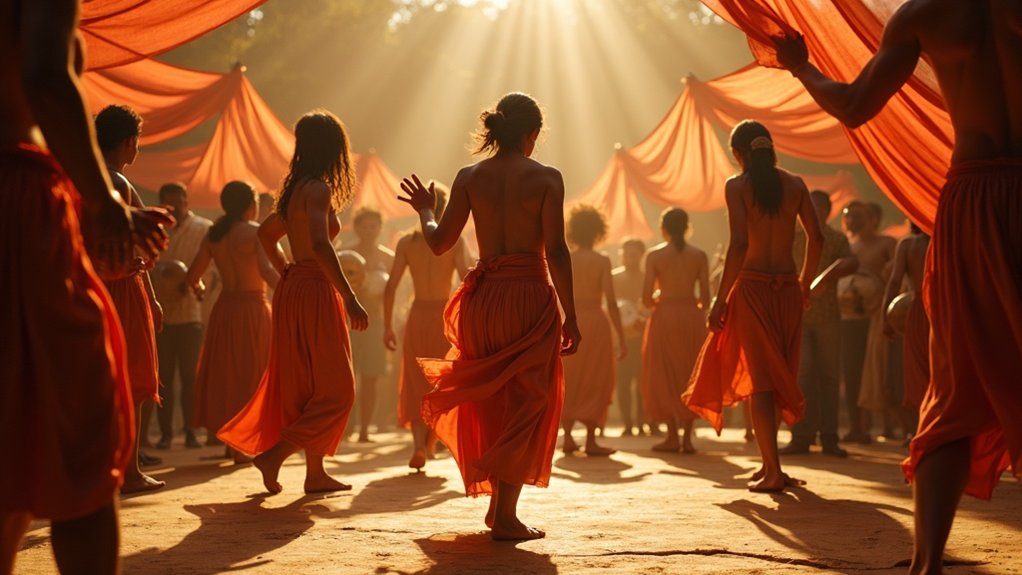
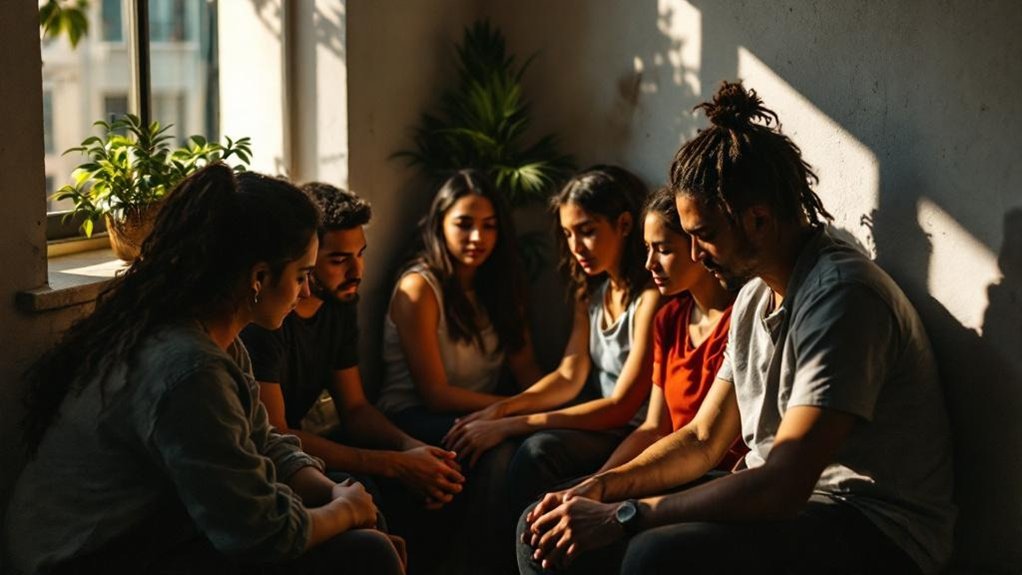
Though silence can feel heavy, your body still knows how to speak. When you step, sway, or pause, you translate memory into motion. You claim the ground beneath you and remind your nervous system that belonging can be practiced. Dance and ritual don’t erase pain; they give it rhythm, edges, and breath. You organize what feels chaotic, reenter your body, and widen the circle of care.
- Map your story: trace gestures from daily life—lifting, kneading, reaching—to anchor movement in lived experience.
- Create ritual containers: set intention, boundary, and closure so emotions move safely through.
- Reclaim space: choose halls, streets, or courtyards; let choreography assert presence where erasure lingered.
- Co-regulate: mirror, pulse, and rest together; shared timing steadies hearts and builds trust.
Soundscapes of Belonging: Music, Identity, and Diaspora
Your steps don’t fall silent when the music starts; they find another way to speak. You hear a beat and remember kitchens, street corners, and journeys. A melody names what borders tried to erase. Lyrics carry languages that shaped you, even when your tongue falters. You loop a song and feel time fold: past kin, present struggle, future hope.
In diaspora, you build home with sound. You remix elders’ records with tomorrow’s bass, not to forget, but to evolve. Playlists become maps—routes between countries, neighborhoods, and selves. When distance stretches, rhythm narrows it. You don’t need perfect notes; you need honest ones. You sing to stay intact. You listen to recognize yourself. In that recognition, belonging isn’t located—it’s practiced, sustained, and shared.
Building Bridges: Cultural Workshops, Circles, and Mutual Care
Even before you gather, the bridge begins with an invitation: come as you are, bring what you carry. You co-create space where stories breathe, where art holds what words can’t, and where care becomes practice, not performance. In workshops and circles, you set consent, name needs, and build agreements that protect curiosity and dignity. You listen for pattern and pause for repair. Mutual care grows when you share roles, redistribute attention, and honor limits.
- Set a clear container: time, purpose, roles, access needs, and boundaries that can be revised together.
- Use embodied practices—breath, rhythm, drawing—to regulate nervous systems and widen insight.
- Rotate facilitation to balance power and spark collective intelligence.
- Close with integration: reflections, resource lists, and next steps for continued connection.
Frequently Asked Questions
How Can Facilitators Prevent Cultural Appropriation in Healing Arts Programs?
You prevent appropriation by co-creating with culture-bearers, gaining informed consent, compensating collaborators, honoring protocols, providing context, and crediting origins. You also train staff on power dynamics, avoid sacred elements, adapt practices respectfully, and establish feedback, review, and accountability processes.
What Evaluation Metrics Measure Long-Term Impact of Creative Healing?

You measure long-term impact using sustained well-being scores, symptom reduction, resilience indices, functional outcomes, social connectedness, retention, longitudinal qualitative narratives, goal attainment scaling, re-hospitalization rates, cost-effectiveness, and community engagement. You’ll track equity impacts, cultural safety, and participant-led definitions of success.
How Do Insurance or Healthcare Systems Recognize Arts-Based Therapies?
Like a bridge, insurers recognize therapies when evidence is strong. You’ll see coverage for licensed music, art, or dance therapy under behavioral health, rehab, or pain programs. Verify CPT codes, provider credentials, diagnosis alignment, preauthorization, and documentation.
What Ethical Guidelines Protect Participant Privacy in Community Art Projects?
You follow informed consent, minimal data collection, opt-in photo/video releases, clear data ownership, de-identification, secure storage, access limits, and withdrawal rights. You also respect community norms, avoid power coercion, and use IRB or ethics reviews when appropriate.
How Can Digital Platforms Safely Host Trauma-Informed Creative Sharing?
You ensure safety by enabling anonymity, granular consent, and pseudonyms; moderating with trained staff; using clear trigger warnings; encrypting data; disabling DMs by default; offering opt-in support resources; documenting reporting pathways; and regularly auditing community guidelines and tech.
Read The Next Blog Post –
You exhale, and the drumbeat inside you steadies. Paint dries like morning light on a windowsill; a story threads itself through your ribs. You step into a circle, palms warm, feet remembering the road your ancestors mapped in rhythm. Voices braid—yours among them—until grief softens into color and sound. You move, and the room moves back, a tide of consent and care. In this shared pulse, you reclaim time, and your belonging blooms like dawn.