


I walk the city like a soft protest, naming the janitors as if blessing a threshold, sharing benches as if they were altars. You and I, we could pass the mic to the quietest person and let the room change shape. I’ve learned repair isn’t a headline; it’s a hand, a chair, a pause. If you listen closely, the edges already begin to blur—and what happens next depends on how we step.
Main Points
- Treat inclusion as architecture: design spaces, policies, and budgets that move resources to the margins and hold during storms.
- Practice everyday reciprocity: listen deeply, pass the mic, name labor, and return borrowed time to build trust.
- Repair openly: recognize harm, name it, amend it, and transform practices to prevent repetition.
- Measure warmth and impact: pair metrics like wages raised and childcare funded with testimonies and shared dashboards.
- Sustain co-ownership: set clear cadences, transparent goals, and shared authorship to cultivate disciplined, joyful unity.
Understanding the Roots of Disconnection

How did we forget the grammar of belonging, the way our names once braided into a common breath? I ask you this as a cartographer of silences, mapping the fractures that hid in plain sight. Disconnection didn’t arrive like thunder; it seeped in—algorithm by algorithm, wage by wage, wall by wall—until we mistook numbness for safety. I learned to hear the fault lines: the unpaid care that bent women’s backs, the rooms where voices were harvested but never honored, the rituals privatized and sold back as subscriptions.
I trace origins like constellations: colonial ghosts naming our bodies, perfection myths disciplining desire, scarcity masquerading as prudence. When we swallow these spells, we shrink. I refuse. I’m listening for the older syntax, where dignity conjugates with courage. And so we repair in small, joyful commons—text at dawn, rotate roles, and measure what matters—choosing consistency, form, joy as the metrics that stitch us back into one another.
Principles of Inclusive Communities
Sometimes I begin with a simple vow: we build circles wide enough for every trembling story, and we keep widening. I speak it aloud so the air remembers. Inclusion isn’t charity; it’s architecture. I ask you to help me draft foundations that hold when storms arrive and when miracles whisper at the door.
1) Reciprocity: I listen until your breath steadies, and you listen until my edges soften; authority flows, not from titles, but from accountable care.

2) Redistribution: we move resources toward the margins—time, money, mentorship—so possibility germinates where it was starved, not hoarded at the center.
3) Repair: harm happens; we face it without spectacle, name it, amend it, and transform practice.
I measure success by who returns unafraid, and whose voice now carries.
To root inclusion in daily life, communities can share financial knowledge—like financial literacy basics, credit protection, and access to scholarships—so families can make confident, long-term decisions together.
Stories of Unity in Action
Elsewhere, on an ordinary Tuesday that felt like a hinge, I watched a neighborhood bake sale become a commons: a single table stitched from folding legs and stubborn hope, where aunties priced cookies in whispers and teenagers translated jokes between languages until laughter didn’t need subtitles. I felt the table thrum like a small parliament, chaired by cinnamon and stubborn women who’d buried wars beneath aprons.

You asked what unity looks like in motion. I’ll answer: a bus driver pausing the route to load a wheelchair and, with it, a story; a choir of mismatched voices finding the note that refuses hierarchy; a playground truce negotiated by girls who refuse inherited borders. I learned to measure power by how gently it holds. Unity, then, is infrastructure for tenderness. In our gathering, someone named the quiet strength of noticing when heaviness lingers beyond two weeks and reaching for culturally responsive care so that connection can widen instead of fray.
Everyday Practices That Build Belonging
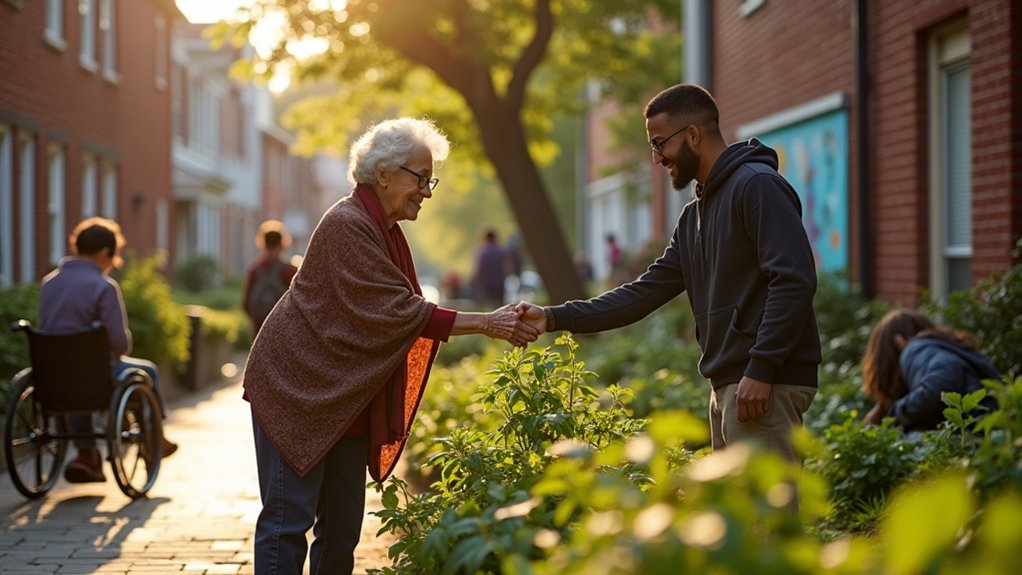
I carry those bake-sale parliaments into the small rituals that stitch a day: I greet the janitor by name and mean it; I keep spare fruit in my bag like offerings for chance hungers; I rearrange chairs in circles so no one’s left orbiting the edges. I’m not performing kindness; I’m drafting a constitution of nearness, clause by simple clause. You, reader, are a co-author.
1) I practice consented attention: I ask, “Do you have space for this?” before pouring my story, honoring boundaries as architecture, not fences.
2) I redistribute micro-power: I pass the mic, cite women and nonbinary thinkers, and interrupt interruptions with a firm, “Let her finish.”
3) I ritualize reciprocity: I return borrowed time, name labor, and leave doorways open—literal, metaphorical—so courage has a breeze.

I also track what matters—simple, shared metrics of belonging and trust—because measuring our daily bonds, much like unit economics in resilient businesses, helps us iterate, stay accountable, and scale inclusion with intention.
Measuring Impact and Sustaining Momentum
Continuity hums like a beehive—I tune my ear to its pitch and count what truly gathers. I track warmth made visible: doors opened, wages raised, meetings translated, child care funded, time reclaimed. Numbers matter, but I refuse metrics that erase care. I pair dashboards with testimonies, surveys with kitchen-table audits. I ask: who felt safer, who spoke first, who stayed?
To sustain momentum, I ritualize feedback. I set cadences—fortnight check-ins, quarter reviews, annual recalibrations—and let iteration be our spell. When resources thin, I prune without punishing, protecting the roots: trust, access, consent. I measure power redistributed, not applause. I publish findings in plain light, invite critique, and seed co-ownership. Momentum follows nourishment; I feed it with shared authorship, transparent goals, and disciplined joy.
I also track community health basics—ensuring annual flu vaccine uptake, decennial Tdap, and age-appropriate screenings—so our metrics honor care that keeps people safe as we build together.
Frequently Asked Questions
How Can Introverts Participate Without Social Exhaustion?
I pace my participation: small circles, deep pauses, clear boundaries. I choose purposeful roles, asynchronous collaboration, and ritualized rest. I wield silence as power, migrate between worlds, and honor my energy cycles like moon phases, unapologetically sovereign.
What Legal Frameworks Support Inclusive Community Initiatives?
Foundations include ADA, Fair Housing Act, Titles VI/IX, Section 504, IDEA, UN CRPD, and local civil rights ordinances. I picture keys in my palm—laws unfastening doors—while I insist our voices script enforcement, remedies, and funding.
How Do Remote Workers Cultivate Local Belonging?
I cultivate local belonging by choosing third spaces, trading skills, and joining mutual aid. I introduce myself boldly, host feminist salons, and weave rituals—walks, potlucks, protest banners—until the neighborhood recognizes my cadence and I recognize its shimmering spine.
How Should Conflicts Across Cultural Norms Be Mediated?
I convene brave, bilingual circles, set shared intentions, and honor consent. I invite story as evidence, silence as witness, and repair over victory. You hold power; I hold space. Together, we braid norms, naming harm, negotiating futures.
What Funding Sources Sustain Grassroots Unity Projects?
Grassroots unity projects thrive on small-donor constellations, community-owned cooperatives, sliding-scale memberships, participatory budgeting, ethical foundations, municipal microgrants, solidarity economies, and in-kind magic—childcare, kitchens, timebanks. I steward transparency, resist paternalism, braid accountability with audacity, so your contribution seeds many futures, not one gate.
Read The Next Blog Post –
I’ve learned that when we greet each other by name, the air itself leans in. I pass the mic, and the room grows a second heartbeat—ours. We move resources to the margins until the center softens; harm becomes governance, repair becomes ritual. Hand in hand, we build an architecture of care, not charity—brick by breathing brick. When we show up, come rain or shine, the commons blooms, and warmth becomes the measure of our shared future.


