



I’ve learned that joy isn’t a lucky mood; it’s a trainable habit built in tiny, repeatable moments. When the kettle clicks or my laptop opens, I invest a few breaths, a stretch, a grateful sentence. These cues anchor me in my body, reward my brain, and compound into steadier days. It’s simple, not easy—and it works best when we design it to be frictionless. Here’s how I make those sparks stick.
Main Points
- Pair tiny, deliberate joy actions with reliable daily cues to train reward circuits and raise baseline well-being through repetition, not novelty.
- Use a portable presence sequence—Identify, Savor, Inquire, Close—anchored to breath, sensation, and one encoding word.
- Keep rituals frictionless: two minutes max, no extra tools; examples include three breaths, one stretch, one appreciative sentence.
- Track proof of presence with minimal effort—one word or a check—linked to the cue; review weekly for bright spots and patterns.
- Protect cadence and compound gains via streaks; if resistance appears, shrink the action scope to maintain consistent reps.
The Science of Joy as a Daily Practice
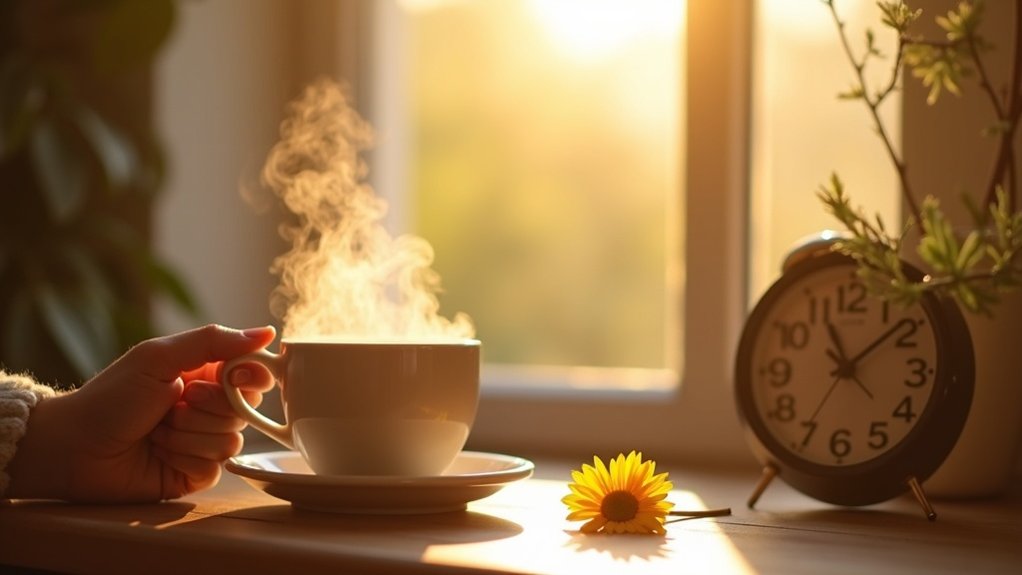
How does joy become a reliable habit instead of a fleeting mood? I anchor it in neuroscience and intentional repetition. The brain’s reward circuitry—dopamine, endogenous opioids—reinforces behaviors we consistently pair with positive affect. When I practice brief, deliberate joy-eliciting actions, synapses that fire together wire together, increasing baseline well-being through neuroplasticity.
I also leverage autonomic balance. Slow, coherent breathing nudges the vagus nerve, shifting me toward parasympathetic dominance, which primes receptivity to pleasure and connection. Then I stack behaviors: savoring wins, gratitude articulation, and value-congruent micro-goals. Each rep encodes predictability, not novelty, as the engine of joy.
Measurement matters. I set clear cues, tight loops, and minimal friction. I track lag (mood stability) and lead (daily reps) indicators. With design, repetition, and feedback, joy becomes skill, not accident.
Spotting Micro-Moments of Presence
Sometimes the smallest slices of attention change everything. When I scan my day with intention, I notice brief, vivid apertures: the breath before speaking, the light on the counter, the micro-pause after an email sends. These moments aren’t filler; they’re training reps for mastery. I don’t wait for a perfect setting. I meet what’s here, name it, and let it register fully. Presence becomes portable, repeatable, and measurable by feel: steadier pulse, softer jaw, clearer choices.

1) Identify: I silently label what I notice—sound, color, sensation—so attention lands cleanly.
2) Savor: I stay with the experience for one extra breath, then release.
3) Inquire: I ask, “What’s vivid now?” to sharpen perception.
4) Close: I note one word—calm, bright, grounded—to encode the moment.
Designing Cues and Rituals That Stick
Why do some practices fade while others become second nature? I anchor joy to reliable cues, then script a simple, repeatable ritual. I pick triggers I already encounter—boiling water, opening my laptop, stepping outside. Each cue gets a single, concrete action: three breaths, one stretch, one appreciative sentence. I design for frictionless execution: visible placement, two-minute maximum, no extra tools.

I also set a clear “if–then” structure: If I pour coffee, then I breathe and soften my shoulders. If I end a call, then I step away and look at the farthest point I can see. I rehearse the sequence once, out loud, to encode it. When a cue fails, I refine it, not myself. Mastery grows from dependable triggers and crisp, compassionate scripts.
Tracking Wins Without Making It a Chore

Reliable cues carry the practice; simple tracking keeps it rewarding. I don’t log every detail; I capture proof of presence. When I track lightly, I return eagerly. My rule: low friction, high meaning. I choose a quick artifact—one word, a check, or a brief note—then close the loop with a breath and a smile. You don’t need charts to honor progress; you need a lens that shows wins.
1) Define “done”: I write a crisp success criterion (e.g., “noticed one sensation”). If met, I mark it.
2) Track one data point: word, emoji, or check. Consistency beats complexity.
3) Tie tracking to a cue: after tea, I log. Same place, same moment.

4) Review weekly: scan for bright spots, name patterns, then recommit.
Scaling Small Sparks Into Lasting Results
How do we turn a single spark into steady light without burning out? I scale gently. First, I name the spark: a breath, a smile, a stretch. Then I pair it with a cue I can’t miss—boiling water, unlocking my phone, sitting down to work. I keep the action crisp: one deep breath, one posture check, one sentence of gratitude.
Next, I compound. I stack one micro-win onto another, only after three consistent days. I track the streak, not the size. When resistance shows up, I reduce scope and protect the cadence.
Finally, I create feedback. I ask: Did energy rise? Did focus sharpen? If yes, I repeat; if not, I refine. Consistency becomes identity. That’s how small sparks scale—deliberate cues, tiny actions, precise reflection, patient compounding.
Frequently Asked Questions
How Can Introverts Tailor Joy Habits for Social Situations?
You can tailor joy habits by pre-planning micro-engagements. I set time-bound goals, choose one-on-one conversations, prepare curiosity prompts, schedule recovery buffers, track energy signals, and exit gracefully. Practice small reps, refine scripts, and celebrate precise, values-aligned connections.
What Cultural Factors Influence Daily Joy Practices Across Traditions?

Shared values, rituals, language, and community norms shape daily joy practices across traditions. I invite you to map your heritage’s rhythms, adopt aligned micro-rituals, and iterate. Like a drumbeat, consistency trains attention, deepens meaning, and sustains vitality.
How Do Neurodivergent Individuals Adapt Presence Cues Effectively?
They adapt by customizing cues: I pair sensory-friendly anchors, chunk tasks, script transition(s), and use timers, checklists, and body-doubling. I iterate data-driven tweaks, practice interoception, reduce stimuli, and rehearse micro-pauses, so your presence system becomes reliable, portable, and skillful.
Can Joy Habits Coexist With Grief or Chronic Stress Periods?
Yes—they can. In grief or chronic stress, I practice micro-joys like breath anchors, sensory check-ins, and gratitude reps. Start with 30 seconds daily. It’s tiny, yet it steadies me like a lighthouse blazing through a thousand storms.
What Ethical Concerns Arise When Tracking Others’ Joy Signals?
Consent, privacy, and power imbalances top my concerns. I’d ask permission, minimize data, anonymize patterns, and honor withdrawal. I’d avoid manipulation, disclose purposes, secure storage, and ensure benefits flow back. Treat others’ signals as sacred, never exploitable.
Read The Next Blog Post –
As I wrap this, I’m inviting you to start tiny today. One cue, one breath, one stretch. Here’s a picture to hold: researchers estimate we take about 20,000 breaths a day—imagine turning just 10 of them into mini check-ins. That’s 70 calm touchpoints this week. Track a line or two, celebrate a spark, and let presence compound. I’ll be right there with you, stacking small wins until they feel like home. Ready to anchor your next breath?


