



Like a house built on sand, I move through rooms where clocks tick louder than hearts. I count license plates, memorize routes, and teach kids to smile without names. Policy shifts feel like weather—sudden, bone-deep—and I keep papers like charms that can bless or betray. Clinics look like borders; whispers carry more than words. I measure joy in quiet portions, waiting for the knock that rearranges furniture, and I want to tell you what we do next.
Main Points
- Policy shifts and headlines trigger chronic stress, disrupting sleep, breathing patterns, and daily routines in mixed‑status Latino households.
- Everyday safety calculus governs doors, clinics, and schools, with rehearsed exit lines, measured eye contact, and documents kept ready.
- Fear turns clinics and social services into perceived checkpoints, delaying care due to eligibility confusion, language barriers, and data‑exposure concerns.
- Children absorb vigilance, narrowing attention for learning, shaping identity negotiations, and prompting code‑switching to fit institutional expectations.
- Community strategies—school sanctuaries, confidentiality policies, know‑your‑rights education, and mutual aid—reduce harm and create small, actionable safety adjustments.
The Everyday Calculus of Safety in Mixed-Status Homes

Some mornings I count doorways like charms, one for each threshold we cross without papers, without certainty, measuring routes the way others measure time. I map the day by risks: the school drop-off, the clinic, the market aisle where questions grow teeth. I rehearse names, dates, the clean geometry of answers. I coach my breath to pass as ordinary.
Safety is a choreography—eye contact held just long enough, silence tuned to the pitch of belonging. I teach the children exit lines that sound like lullabies. I memorize neighbors’ rhythms, the hour the mail truck comes, the gossip that signals weather. Fear becomes arithmetic, small and exact. I carry our family like a secret lantern, bright enough to guide, dim enough to survive. In this careful math of the day, I also plan for annual flu vaccines and routine checkups, keeping our records ready so care is there when we need it.
How Policy Shifts Translate Into Chronic Stress
Suddenly, a memo whispers through the news and my chest learns a new tempo. Policy shifts don’t just change rules; they rewire circadian rhythms. I feel it in the jaw’s clamp, the breath’s shortened stride, the calendar’s new superstitions. A sentence in the Federal Register lengthens my nights. Guidance becomes rumor, rumor becomes ritual: double-check locks, reroute commutes, rehearse names that fit in the mouth of authority.
Stress calcifies as habit. Cortisol is a metronome, precise, unforgiving. I inventory documents like talismans, yet paper can’t ward off a foghorn at dawn. You know the dance: hold hope in one hand, contingency in the other. The body translates headlines into vigilance, economy into rationing, time into watchfulness. Policy moves; the nervous system obeys.

Amid this vigilance, community habits like tight feedback loops and reciprocal networks translate anxiety into action, turning fear into small, measurable adjustments that keep families and businesses steadier.
Impacts on Children’s Well-Being, Schooling, and Identity
The metronome of worry doesn’t stop at my ribs; it taps into our children’s bones, tuning their mornings before the bus sighs to a halt. I watch them shoulder backpacks like small shields, practicing invisibility as if it were homework. In class, they track exits, not metaphors; vigilance steals bandwidth from algebra and wonder. Teachers read shyness; I read code-switching as survival—voices trimmed, names folded to fit in tight desks.
At night, identity whispers through the vents. They ask which passport dreams speak, whether a hyphen is a bridge or a border. I tell them the house remembers our stories; the walls hum our vowels back. We rehearse belonging like scales: breath, name, lineage. Their resilience shines, but resilience isn’t rest. A small weekly money check-in and teaching kids about needs vs. wants can reduce stress and build confidence, turning financial literacy into one more way we protect their well-being.
Barriers to Healthcare and Social Services Under Fear
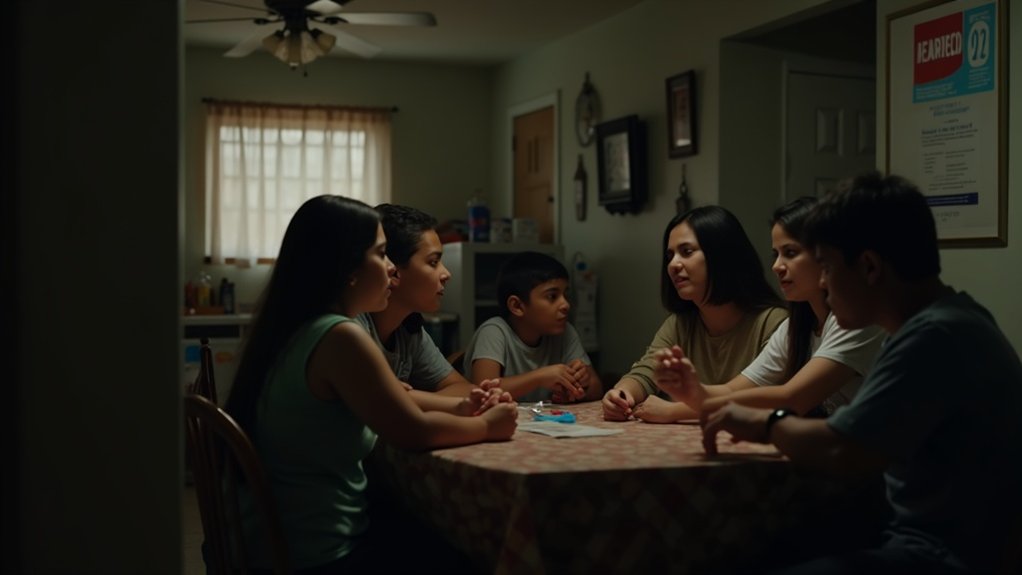
How do you make a clinic doorway stop looking like a checkpoint? I arrive with a fever and a script of names I won’t say. You know this choreography: carry documents like talismans, swallow accents, rehearse silence. The receptionist’s questions bloom into thorns—address, insurance, citizenship—each syllable a gate. Even eligibility feels slippery; rules shape-shift by county and rumor. I watch the clock, calculating exposure: one minute for essentials, two for risk.
In the waiting room, fear triages us before any nurse. We ration pain, treat symptoms with folklore, postpone until crisis. I see you do the same—guard your data, mask your lineage, avoid ambulances like sirens summon wolves. We become our own case managers, translating bodies, codes, and shadows, paying with sleep instead of copays. And when the pressure builds past what we can carry, noticing two weeks of heaviness, sleep shifts, or looping thoughts can be the cue to seek support with disciplined courage.
Community, School, and Policy Strategies to Reduce Harm

Already, I imagine a map that breathes—block by block, we stitch trust into ordinary places: a classroom that doubles as a clinic, a bodega where flyers whisper rights, a church basement where promotoras carry lanterns of language and law. I meet you there, where fear loosens. We train educators to be guardians of confidentiality, turn attendance calls into care checks, fund counselors who speak the home’s music. We design sanctuary protocols: no ICE on campus, no ID traps at doors. At night, we host know-your-rights circles with notarized power-of-attorney kits ready. We push policy upstream—firewalls between services and enforcement, universal school meals, municipal IDs, language access mandates. When systems breathe with us, panic thins, and families steady their beautiful, everyday plans. And alongside these efforts, we seed neighborhood rituals of motion—family movement nights in school gyms, quick micro-sets between community meetings, and tiny covenants that track joy and recovery—so bodies learn safety while systems learn to protect it.
Frequently Asked Questions
How Do Immigration Fears Affect Employment Choices and Workplace Dynamics?
Immigration fears steer employment toward invisibility; I choose safer gigs, avoid advancement, hush my brilliance. In workplaces, I scan faces, manage risk, overperform quietly. Trust thins, networks shrink, and collaboration breathes shallowly, while ambition flickers like a guarded candle in wind.
What Financial Planning Strategies Help Mixed-Status Families Build Stability?
Automate cash flow, build a six‑month emergency fund, separate legal entities, document income meticulously, optimize ITIN and SSN tax strategies, diversify across low‑cost index funds and cash‑like treasuries, insure health and life, and draft powers of attorney, guardianships, and living trusts.
How Do Families Manage Housing Leases and Landlord Interactions Amid Status Concerns?
I vet leases, I document tenants, I designate a point person; I negotiate quietly, I pay on time, I archive everything. I coach you to use co-signers, limited disclosures, lawful protections, and calm, scripted responses when questioned.
Which Digital Privacy Practices Protect Undocumented Relatives on Social Media?
I lock profiles, limit tags, strip metadata, use pseudonyms, disable location, curate friend lists, purge facial recognition, enable two-factor, and avoid DMs with sensitive details. I teach you threat modeling, ephemeral stories, and consent-driven posting, like shielding fireflies.
How Can Faith Communities Provide Confidential Support Without Legal Risk?

I’d create confidential aid through anonymous hotlines, trauma-informed clergy, and attorney partnerships. I’d separate pastoral notes from records, avoid immigration advice, document-only consent, provide know-your-rights workshops, and use cash or vouchers—quiet lanterns—so you’re sheltered, supported, and legally unseen.
Read The Next Blog Post –
In the hush between heartbeats, I count the cost of always looking over my shoulder, and I know you feel it too. Policy turns like weather, and we carry umbrellas under clear skies. Our children read our faces, learning to breathe in shallow sips. Still, I tuck courage into lunchboxes and prayers into pockets. When we gather, fear loosens its grip. Together, we keep the lights on—come hell or high water—and the calendar becomes a doorway, not a trap.


